Coloured Concrete Werribee, Colour Built to Last
Coloured concrete carries its colour through the slab rather than on top of it. Oxide is dosed into the mix at the batching plant, so the pigment runs the full thickness: nothing wears through to grey, a chip shows the same colour, and a future grind or hone finds colour underneath. Across Werribee and the Wyndham corridor the common work is charcoal and mid-grey driveways that hide tyre marks, paths coloured to tie into them, and lighter sandstone tones around pools where a dark slab would get too hot underfoot in summer. Consistency is the whole job, since colour arrives on the truck and cannot be adjusted on the ground, so every load comes from one plant at one dose and a test panel is poured before a shade is committed to. Call 0485 032 128.
GET A FREE QUOTE
GET A FREE QUOTE
Peak Concreting Werribee
Coloured Concrete Werribee: Driveways, Paths and Alfresco Areas
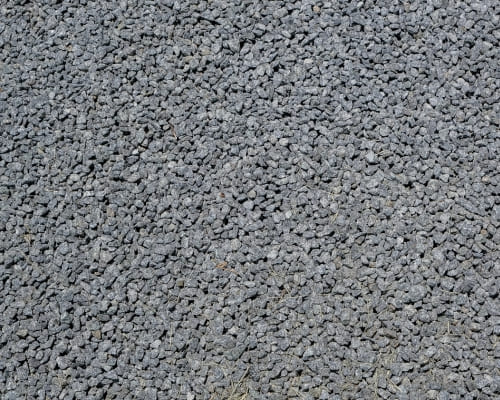
Coloured concrete Werribee properties get is colour run through the concrete itself rather than applied to the top of it, which is the whole reason it lasts. The oxide goes in at the batching plant, so the colour is the full depth of the slab and cannot wear off, peel or be scratched through. What changes between surfaces is the shade that suits and what the surface has to survive, and the four sections below cover where coloured concrete goes across the Wyndham corridor.
Coloured driveways and crossovers
A driveway is the largest single surface on most blocks and the one seen from the street, so colour here does more for the look of a house than anywhere else. Charcoals and mid greys are the common choice because they read as deliberate rather than decorative and hide tyre marks far better than light tones. Where a driveway meets a council crossover the crossover usually stays plain grey, so the colour change is set at the boundary deliberately.
Coloured paths and side access
Colouring a path ties it to the driveway so the two read as one scheme rather than two separate pours, and on a small front yard that single decision does a lot. Paths carry a practical caveat though: a coloured surface still needs a broom texture over it, because a smooth coloured finish is slippery wet, and a path is walked on in the rain by people least steady on their feet.
Coloured alfresco areas and pool surrounds
Under an alfresco roof the colour stays out of direct ultraviolet light and holds its intensity for far longer than the same mix in the open, which makes richer and darker tones viable there. Around a pool the constraint is heat rather than fade: a dark coloured slab in full sun gets genuinely too hot for bare feet in a Werribee summer, so pool surrounds are kept to lighter sandstone and buff tones for comfort as much as for looks.
Colour combined with a stamped or honed finish
Integral colour is a base that other finishes build on. Stamped work relies on it, since the pattern needs colour to read as stone or slate rather than as textured grey. A honed surface grinds the top skin off a coloured slab to expose the sand and fine aggregate within it, which gives a deeper, stonier version of the same colour. Both are quoted as the colour plus the finish rather than as one item.
Peak Concreting Werribee
How Colour Goes In: Oxide Through the Mix or Dry Shake
There are two ways colour gets into concrete, and they produce different results at different prices with different risks. One colours the whole batch before it leaves the plant. The other is broadcast onto the wet surface and worked in on site. Both are legitimate and both are sold simply as coloured concrete, so knowing which a quote refers to matters, as does the one step that protects against disappointment either way.
Oxide mixed through the batch at the plant
Integral colour is dosed into the mix at the batching plant, so every cubic metre arrives already coloured and the pigment runs the full thickness of the slab. Nothing can wear through to grey, a chip exposes the same colour, and a future grind or hone finds colour underneath. It costs more because the oxide is paid for by volume across the whole pour, and it requires consistency: every load on the job has to come from the same plant with the same dose.
Dry shake colour broadcast onto the surface
Dry shake is a pigment and hardener powder cast onto the surface of the fresh pour and floated in, colouring the top few millimetres only. It costs less than integral colour, gives very strong saturated tones that integral oxide struggles to reach, and leaves a harder wearing surface. The risks are that application has to be even or the colour mottles, and that any deep chip or future grinding exposes grey concrete beneath.
Why a test panel matters before the pour
Oxide in a bucket, a colour chart and a finished slab in daylight are three different things. The same dose reads differently depending on the cement colour, the sand in the local mix, how wet the pour was, and how the surface was finished. A test panel poured from the actual mix and finished the actual way, then looked at dry and in daylight, is the only reliable preview, and it is far cheaper than disliking eighty square metres of driveway.
Peak Concreting Werribee
Why Werribee Homeowners Choose This Coloured Concrete Contractor
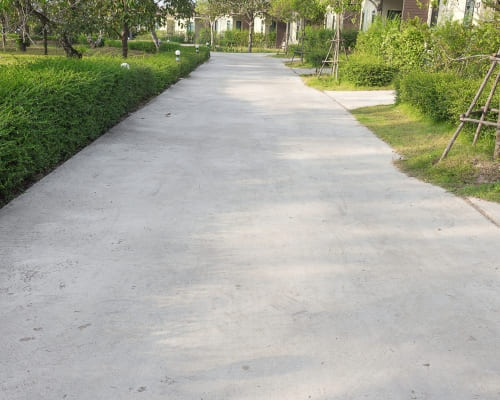
Coloured concrete is the finish with the least margin for error, because the colour arrives on the truck and cannot be adjusted once it is on the ground. Consistency is the whole job: every load from the same plant at the same dose, the same water content, the same finishing timing, and the same curing across the slab. Peak Concreting Werribee pours a test panel before committing a coloured job, orders from one plant, and quotes the colour and the finish as separate line items. Public liability cover runs to twenty million dollars and the shade is agreed in writing first.
Twelve years of coloured concrete across Werribee and the Wyndham corridor
Twelve years of concrete work across the Wyndham corridor is what makes a colour recommendation worth anything, because the same oxide reads differently here than on a chart. The local sand and cement shift the final shade, the unshaded light across these flat blocks at Tarneit, Truganina and Manor Lakes makes mid tones look paler than expected, and the charcoals that look severe on a sample read well against the dark roofs common through the newer estates.
Peak Concreting Werribee
What Coloured Concrete Costs in Werribee and Why It Is Priced Per Square Metre
Coloured concrete is priced per square metre, and the order of cost is straightforward: plain grey is the baseline, dry shake colour sits above it, and integral oxide through the mix is the dearest of the three, with deep and strong shades costing more again than pale ones. All three then carry the same groundwork, since colour changes nothing below the surface. The two sections below explain where the premium actually goes, which is not where most people assume.
How a coloured concrete cost per square metre is worked out in Werribee
The rate is the plain concrete rate plus three things: the oxide itself charged by volume across the whole pour, a sealer that is no longer optional because colour depends on it, and extra care in the placing and finishing to keep the slab consistent. Groundwork is unchanged. Comparing a coloured quote against a plain one is really comparing those three items, so asking which colouring method a quote assumes is the first question.
Why integral colour costs more than a plain pour
Oxide is bought by weight against the volume of concrete, so the premium scales with the whole slab rather than with its surface, and dark shades need considerably more pigment than pale ones. Beyond the material there is a logistical cost: every load must come from one plant at one dose, which limits scheduling, and part loads cannot be topped up from elsewhere. Add the mandatory sealer and the premium is real, but it buys colour that cannot wear off.
Peak Concreting Werribee
Coloured Concrete Versus Plain Concrete, Pavers and Tiles
Coloured concrete competes with three things, and the honest case against it differs in each. Plain concrete competes purely on cost and asks whether the colour is worth the premium. Pavers compete on looks and on being liftable. Tiles compete on finish quality in an alfresco. Each comparison is taken separately below, because a single claim about durability would hide the fact that each alternative genuinely wins on something real. Where the surface is out of sight or under cover, one of the three is usually the better answer.
Coloured concrete versus plain grey
Plain grey is cheaper, needs no sealer to look as intended, and will never go blotchy or fade, because it has no colour to lose. That is a real argument for a shed floor, a side path or anything out of sight. The case for colour is that a driveway is the biggest visible surface on a block, and once it is poured the decision stands for decades. Nobody has ever replaced a driveway because the grey was too grey, but plenty wish they had coloured it.
Colour compared with paving for long-term upkeep
Pavers offer colour and pattern without a single pour and individual units can be lifted for service access or replaced if damaged, which coloured concrete cannot match. What they bring is joints: on Werribee's reactive clay the sand bed moves unevenly, pavers rock and step against one another, and every joint grows weeds and hosts ants. Upkeep over ten years is the real difference, since a sealed coloured slab is washed and resealed while a paved area is relaid.
Coloured concrete versus tiles in an alfresco
Tiles give a finer, more finished surface than concrete can, in a far wider range of looks, and under an alfresco roof they are a genuinely good choice. The weaknesses are grout, which stains and never looks clean again, and bedding, since a tile over a slab that moves will drum and eventually lift. Coloured concrete under an alfresco is the slab itself, so there is nothing to debond, and honing it afterwards narrows the gap in finish considerably.
Peak Concreting Werribee
Oxide Shades and Choosing a Colour That Suits the House
Concrete oxide colours are earth pigments, so the usable range runs through greys, charcoals, browns, reds and buffs rather than into bright colours, and that limit is a help rather than a constraint because those are the tones that sit well against a house. The decision is made against the fixed elements of the property rather than in isolation, since the slab will outlast the paint and probably the fencing. The two sections below cover the palette and how to choose within it.
Charcoals, greys, reds and sandstone tones
Charcoals and deep greys are the most popular on new builds, reading as deliberate and hiding tyre marks well, though they get hot underfoot in full sun. Mid greys are the safest choice and the hardest to get wrong. Reds and terracottas suit older brick homes and warm up a shaded area. Sandstone, buff and cream tones stay coolest underfoot, which is why they dominate pool surrounds, but they show oil and leaf staining most readily.
Matching colour to render, roof and fencing
The reliable method is to pick up the roof or the render rather than to contrast with them, because a slab is a large horizontal plane and a clashing tone is very hard to live with. Taking the colour a shade or two away from the roof usually works better than matching exactly, which can look flat. Colorbond fencing and garage doors are worth including in the decision, since those are the other large flat colour areas in view.
Peak Concreting Werribee
Why Coloured Concrete Fades, and How to Hold the Colour
Coloured concrete does lose intensity over time, and anyone claiming otherwise is selling. The pigment itself is extremely stable, so what changes is almost always the surface above it: a worn sealer, a bloom of salts, or a cement skin that has weathered. That is good news, because every one of those is recoverable, unlike a coating that has worn through. The three sections below cover what actually causes the change and what restores it.
How wet weather and curing change the final shade
The single largest influence on final colour is not the oxide dose but how the slab was cured. Concrete that dries unevenly, because one part was in sun and another in shade, or because rain fell on a fresh pour, sets with visibly different shades across the same slab. Water added on site to make a load easier to place also lightens that section permanently. None of this can be corrected afterwards, which is why consistency during the pour matters more than the colour choice.
UV fade, efflorescence and resealing to restore colour
Ultraviolet light degrades the sealer long before it touches the pigment, and as the sealer goes the surface reads flat and pale. Efflorescence adds a separate white haze as salts migrate out of the slab. Both respond to the same treatment: clean, acid wash where salts are present, let the slab dry fully, then reseal. A surface that looks badly faded usually comes back close to its original depth of colour after a proper reseal, which surprises most owners.
Patching and colour matching an existing slab
An honest warning: a patch in coloured concrete will not match. New concrete cures lighter than weathered concrete even at an identical oxide dose, and the difference narrows over months without ever vanishing. Where a repair is unavoidable the better approach is to replace a whole panel to the existing joint lines, which reads as a panel rather than a patch, and to reseal the entire surface afterwards so the sheen is at least consistent across it.
Related Concreting Services
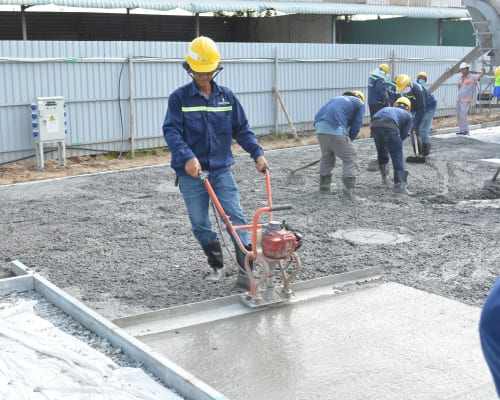
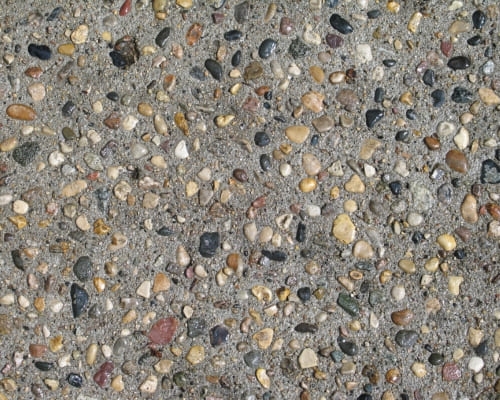
Exposed aggregate concrete for Werribee driveways, paths, alfresco and pool surrounds - washed to reveal the stone for grip and low upkeep. Compacted base, reinforced, sealed, fixed on-site quotes.
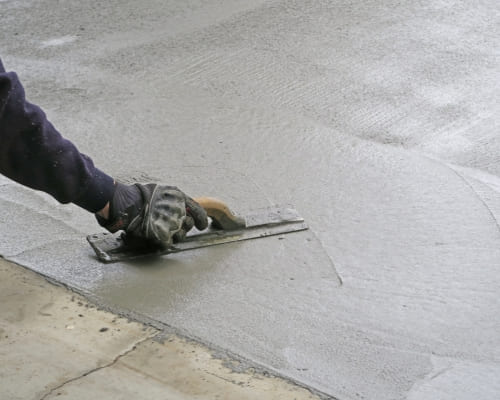
Stamped concrete driveways, paths, alfresco areas and pool surrounds across Werribee and Wyndham, in slate, flagstone, timber-look and cobble patterns. One continuous slab, no joints to weed. Call 0485 032 128.
Sealing and resealing driveways, exposed aggregate and decorative concrete across Werribee and Wyndham. Preparation quoted as its own line item, because that is what decides whether a seal lasts. Call 0485 032 128.
TESTIMONIALS
What Our Coloured Concrete Customers Say About Us
The Process
3 Step Process For Your Coloured Concrete Needs

Site visit and fixed quote
It starts with a proper look at the block. The crew measures up, checks access and the lie of the ground, talks through what you want, and flags anything that could affect the pour, such as reactive clay, possible floaters or shallow rock, or drainage on low ground. For structural work that includes whether a soil test or site classification is needed. A fixed, itemised, on-site quote for the agreed scope follows, so there are no surprises later.

Preparation and pour
Good concrete is made before the truck arrives. The excavation goes to the right depth, allowing for any basalt floaters or shallow rock encountered. For slabs, paths and driveways a solid base is built and compacted, formwork is set to correct falls for drainage, and reinforcement is laid to suit the job, while holes for stumps and pier footings are bored to the depth on the engineer's details. On reactive sites the footing design follows those details. The pour is then finished to suit the job, from a broom finish, exposed aggregate or a decorative surface on a slab to a level, plumb top on a stump.

Curing, joints and clean finish
The last stage is where a lot of concrete work is won or lost. The concrete is cured deliberately, slowing surface evaporation to suit the dry, windy conditions common across the west, which helps reduce early cracking. On slabs and driveways, control joints are cut and placed to guide where any movement cracking appears, since joints control cracking rather than prevent it. Sealing is applied where it suits the finish, the site is tidied, and you are walked through curing times and how to look after new concrete in its first few weeks.
Coloured Concrete In Werribee
FREQUENTLY ASKED QUESTIONS
Everything you need to know about our Coloured Concrete In Werribee
Does coloured concrete fade over time?
It loses intensity, but usually not for the reason people assume. The oxide pigment itself is very stable; what degrades is the sealer above it, and as that goes the surface reads flat and pale. Salts migrating out of the slab add a separate white haze. Both are recoverable: clean the surface, acid wash where efflorescence is present, let it dry fully and reseal, and most slabs come back close to their original depth of colour. That is the real difference from a painted or coated surface, where wear exposes grey concrete permanently.
Is colour mixed through the concrete or applied on top?
Both methods exist and they are both sold as coloured concrete, which is worth clarifying in any quote. Integral oxide is dosed into the mix at the plant, so the colour runs the full thickness of the slab and nothing can wear through to grey. Dry shake is a pigment and hardener powder cast onto the fresh surface and floated in, colouring only the top few millimetres; it costs less, reaches stronger saturated tones, and leaves a harder surface, but a deep chip or any future grinding exposes grey underneath.
Why does coloured concrete sometimes look patchy or blotchy?
Almost always from the pour rather than the pigment. Concrete that cures unevenly sets with visibly different shades, so a slab half in sun and half in shade, or one rained on while fresh, can finish mottled. Water added on site to make a load easier to place permanently lightens that section. Loads from different plants or different doses do the same. None of it can be corrected afterwards, which is why one plant, one dose and consistent finishing and curing matter more on a coloured pour than on a plain one.
What colours are available in concrete oxide?
Oxides are earth pigments, so the range runs through greys, charcoals, browns, reds, terracottas and sandstone or buff tones rather than into bright colours. Charcoals and deep greys are the most common on new builds because they read as deliberate and hide tyre marks, though they get hot in full sun. Sandstone and cream tones stay coolest underfoot, which is why they dominate pool surrounds, but they show oil and leaf staining most. A test panel in the actual mix is the only reliable way to judge a shade.
Does coloured concrete need sealing?
On coloured work a sealer is not optional, because it does the appearance as well as the protection. The sealer is what gives the colour its depth and richness, so an unsealed coloured slab looks washed out compared with the same mix sealed, and it will also stain more readily. Resealing on schedule is what holds the colour over decades, and letting a sealer fail completely is what makes a slab look faded. The sealer is quoted as part of the job rather than as an extra.
Can a coloured slab be patched to match?
Not invisibly, and it is better to know that beforehand. New concrete cures lighter than weathered concrete even at an identical oxide dose, and while the difference narrows over the following months it never fully disappears. Where a repair is unavoidable, replacing a whole panel out to the existing joint lines reads as a panel rather than a patch, which is far less obvious. Resealing the entire surface afterwards also helps, since it at least makes the sheen consistent across old and new.
Request A Free Coloured Concrete Quote
GET A FREE QUOTE
BUSINESS
SERVICES
OPERATING HOURS
Sun: 6am - 10pm
Mon: 6am - 10pm
Tue: 6am - 10pm
Wed: 6am - 10pm
Thu: 6am - 10pm
Fri: 6am - 10pm
Sat: 6am - 10pm