Stamped Concrete Werribee, Patterned and Sealed
Stamped concrete gets the look of stone, slate, timber or cobble without any of the joints that make paving a maintenance job. The pattern is pressed several millimetres into a fresh slab while it is still green, so it is a physical deformation of the concrete rather than a coating, and it cannot peel or flake off. The slab stays one continuous reinforced piece, which matters on Werribee's reactive clay, where a sand bed under pavers moves unevenly and leaves units rocking, rutted and weeded. The work is the most time-critical in decorative concrete, because the stamping window can be as little as an hour in hot northerly weather and cannot be extended, so pours are scheduled to the forecast and crews are sized to finish the whole area inside it. Call 0485 032 128.
GET A FREE QUOTE
GET A FREE QUOTE
Peak Concreting Werribee
Stamped Concrete Werribee: Driveways, Paths, Alfresco and Pool Surrounds
Stamped concrete Werribee properties use is a single poured slab with a pattern pressed into its surface while it is still green, so it reads as stone, slate, timber or cobble while remaining one continuous piece of reinforced concrete. There are no units to shift, no joints to weed and no sand bed to wash out. What changes between surfaces is the pattern scale that suits and the sealer the surface needs, and the four sections below cover where it goes.
Stamped driveways and crossovers
A stamped driveway is where the illusion pays off most, because it delivers the look of a paved or cobbled entrance across a large area at a fraction of the labour of laying units, and without the rutting and weed growth that paving develops on reactive clay. Pattern scale needs to be generous on a driveway so it does not read as busy, and the sealer must be rated for vehicle traffic rather than chosen for appearance.
Alfresco areas, courtyards and entertaining spaces
Under cover is where stamped concrete keeps its looks longest, since the pattern and colour are out of direct ultraviolet light and the sealer lasts far longer. A courtyard or alfresco also suits finer, more detailed patterns that would look fussy on a driveway, and a slate or flagstone texture in a small space reads convincingly. Furniture is the practical consideration, because chair legs catch on a deeply textured pattern more than on a flat one.
Pool surrounds and coping
Around a pool the texture itself provides grip, which is a real advantage over a smooth slab, but it comes with a specific caution: deeply embossed patterns hold water, grit and leaf litter in their recesses and are uncomfortable on bare feet. A shallow emboss suits a surround far better than the deep ones that photograph well. Falls are set away from the pool so splash-out carries debris off the surface rather than back into the water.
Stamped garden paths and side access
A stamped path takes a cobble or small flagstone pattern well, because the narrow width suits a small repeating unit that would look busy across a driveway. Scale is the whole decision here. The continuous slab means nothing to lift, rock or settle underfoot, which matters more on a path than anywhere, and joints are cut to follow the pattern lines so they read as part of it rather than across it.
Peak Concreting Werribee
How a Stamped Pattern Is Pressed, Coloured and Released
Stamping is the most time-critical work in decorative concrete, because the window in which a slab can be stamped is short and cannot be extended. Too wet and the mats sink and the pattern closes up; too dry and they will not press at all. Everything else, the colour, the release agent, the jointing, is organised around hitting that window across the whole pour. The four sections below cover the sequence in the order it happens.
Timing the stamp while the slab is still green
The slab is poured, levelled and floated, then left until it has stiffened to the point where a thumb press leaves an impression but no water surfaces. That window can be as little as an hour in hot windy Werribee weather, and it moves across a large pour, so the crew has to be sized to stamp the whole area within it. This is the main reason stamped work costs more per square metre than any other finish.
Release agents, colour hardeners and antiquing
A release agent is broadcast over the surface before the mats go down, both to stop them sticking and to deposit a secondary colour in the recesses of the pattern. That is what gives stamped concrete its variegated, weathered look rather than a flat single tone. Colour hardener can be worked into the surface first for a stronger base colour and a harder wearing skin. Antiquing is the later washing back of the release agent, which controls how much of that secondary tone remains.
Jointing and borders that frame the pattern
Control joints are still required on a stamped slab, and placing them well is the difference between a slab that looks designed and one that looks cut. They are set to follow pattern lines where possible so they disappear into the texture rather than running across it. A border in a contrasting pattern or colour around the perimeter frames the field, hides the transition at edges, and is what makes stamped work read as deliberate.
Washing back, sealing and curing the finished slab
Once the concrete has hardened the excess release agent is washed off, and how hard it is washed determines the final depth of the antiquing, so it is a judgement rather than a procedure. The slab then cures before any sealer goes near it, since sealing a slab that is still releasing moisture traps it and causes a milky bloom under the film. The first seal is the one that sets how the colour reads.
Peak Concreting Werribee
Why Werribee Homeowners Choose This Stamped Concrete Contractor
Stamped concrete is unforgiving in a way other finishes are not, because the critical work happens inside a window measured in minutes on a slab that is already down. A pour stamped too late is a plain slab with partial texture, and there is no second attempt. Peak Concreting Werribee sizes the crew to the area so the whole pour is stamped inside its window, and agrees the pattern, the base colour and the release colour in writing before the truck is booked. Public liability cover runs to twenty million dollars and quotes are fixed and itemised.
Twelve years of stamped concrete across Werribee and the Wyndham corridor
Twelve years of concrete work across the Wyndham corridor matters most on this finish because the stamping window is set by the weather, and the weather here is the problem. A hot northerly across these flat open blocks at Tarneit or Truganina can take an hour off the window with no warning, so pours are scheduled for the time of day and the forecast rather than for convenience, and the crew is sized for the worst case rather than the average.
Peak Concreting Werribee
What Stamped Concrete Costs in Werribee and Why It Is Priced Per Square Metre
Stamped concrete is priced per square metre and sits at the top of the decorative range. The order across the finishes on this site runs plain broom lowest, then coloured concrete, then exposed aggregate, then honed, with stamped the dearest of the lot, and natural stone pavers above all of them again. The reason stamped sits where it does is labour rather than materials. The mats, the release agent and the colour are a modest share of it. What costs is crew size, because the whole pour has to be stamped inside a window that cannot be extended, so a job needs enough hands on site to finish it in time. The two sections below explain the drivers.
How a stamped concrete cost per square metre is worked out in Werribee
The rate covers the groundwork and the pour as any slab would, then adds the colour, the release agent, the mat hire or ownership, the labour to stamp the area inside its window, the wash back, and the sealer. Labour during the stamping window is the dominant item. A quote that looks notably cheaper than others has usually assumed a smaller crew, which is the one economy that puts the finish itself at risk.
Why pattern complexity and area change the price
Pattern complexity drives it through the detail work rather than the stamping: an interlocking cobble needs more careful alignment mat to mat than a broad flagstone, and a contrasting border is set out and stamped separately. Area works in two directions, since a larger job spreads the setup cost but also demands a bigger crew to stay inside the window. Awkward shapes, curves and multiple levels all add hand detailing at the edges.
Peak Concreting Werribee
Stamped Concrete Versus Pavers, Natural Stone and Stencil
Stamped concrete exists to imitate three things, so the honest comparison is against each of them rather than against concrete generally. Pavers are what it most often replaces. Natural stone is what it imitates and cannot equal. Stencil is the other way of getting a pattern onto concrete and is frequently confused with stamping. Each comparison turns on something different, and in one of them the alternative is clearly the better product if the budget allows.
Why pavers shift and weed while a stamped slab does not
Pavers are individual units on a sand bed, and on Werribee's reactive clay that bed moves unevenly beneath them, so units rock, step against each other and form ruts in wheel paths. Every joint grows weeds and houses ants. A stamped slab is one reinforced piece with joints only where they are cut, so it moves as a unit and offers nothing to grow through. Pavers keep one real advantage: individual units can be lifted for service access and replaced.
Stamped concrete compared with natural stone
Natural stone is the better product and it is worth saying so. Real bluestone or granite has depth, variation and a tactile quality that a mat pressed into concrete approximates rather than matches, and it looks better up close. What it costs is several times stamped concrete in material alone, before the labour of laying it, and it still carries joints and a bedding layer that move on this ground. Stamped concrete is the sensible compromise, not the superior product.
Stamped concrete compared with a stencil finish
These two are regularly sold as the same thing and are not. A stencil pattern is sprayed as a thin resurfacing coating over an existing slab, so the surface stays flat and the pattern is colour rather than texture, and it can be applied to concrete already there. Stamping is a physical deformation of a fresh slab several millimetres deep, so it has real texture and cannot be done to an existing surface at all. Stencil is cheaper; stamping is the genuine article.
Peak Concreting Werribee
Pattern Choices: Slate, Timber, Cobble and Flagstone
Pattern is chosen for scale and context more than for preference, because a texture that looks right on a sample board can read as busy or fake across eighty square metres. The four families below cover almost all residential work, and each has a scale it suits. The fourth section deals with the part that decides whether the result looks deliberate, which is how the pattern and its colours relate to the house rather than to a catalogue.
Slate and flagstone textures
Slate and flagstone are the most forgiving patterns and the most common, because their irregular shapes and large format read well across a big area and the texture is shallow enough to be comfortable underfoot and easy to sweep. Flagstone uses large irregular plates with narrow joint lines; slate is flatter again with a fine riven surface texture. Both take antiquing well, since the release colour settles into the joint lines and gives genuine depth.
Timber-look and cobblestone patterns
Timber-look mats press plank lines and grain into the slab, which works convincingly on a deck-style alfresco and avoids the maintenance of real timber, though it needs careful colour work to avoid reading as grey boards. Cobblestone uses small repeated units and is the most demanding pattern to lay well, because any misalignment between mats shows immediately in the grid. It suits smaller areas, courtyards and borders better than a large open driveway.
Why texture depth matters more than pattern
Depth is the specification that affects daily life and the one nobody asks about. A deeply embossed pattern looks more convincing in photographs and holds water, grit and leaf litter in its recesses, is harder to sweep, and is uncomfortable on bare feet. A shallower texture is easier to live with and safer around a pool. For any surface walked on wet or barefoot, a shallow emboss is the better choice regardless of which pattern family is picked.
Matching a pattern to the house and fencing
The base colour and the release colour are chosen against the fixed elements of the property, since the slab will outlast the paint. Picking up the roof or the brickwork a shade or two away works better than matching exactly, and the release colour is best kept within a tone or two of the base so the result reads as weathered stone rather than as two colours. Large flat areas such as Colorbond fencing and garage doors belong in that decision too.
Peak Concreting Werribee
Sealing, Resealing and Staying Safe Underfoot
Stamped concrete depends on its sealer more than any other finish, because the sealer carries both the colour depth and the protection of the antiquing in the pattern recesses. Let it go and the surface fades to a flat, pale version of itself. The same sealer is also what makes a textured surface slippery if the wrong product is chosen, so it is doing two jobs that pull against each other. The two sections below cover both.
Keeping a stamped surface non-slip around water
The texture itself provides grip, which is the advantage, and a high-gloss sealer film can glaze straight over it and cancel that out. Around a pool or on a sloped driveway the answer is a satin or low-sheen sealer with an anti-slip additive broadcast into it, which preserves the texture's grip without flattening the look. Choosing a shallower pattern in the first place helps more than any product does, because the recesses hold less water.
How often a stamped slab needs resealing
More often than plain concrete, because there is more at stake. A topical sealer on a stamped driveway runs a few years before it needs recoating, and these flat unshaded blocks are hard on it. The pattern recesses hold their sealer longer than the high points, so the first sign is usually the raised areas going dull while the joint lines still look wet. Resealing at that point is a clean and recoat; leaving it until the film fails means stripping.
Related Concreting Services
Coloured concrete driveways, paths and alfresco areas across Werribee and Wyndham, with oxide run through the mix rather than painted on. Test panel poured before the shade is committed. Call 0485 032 128.
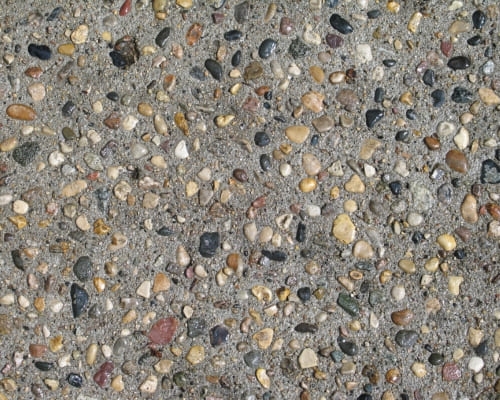
Exposed aggregate concrete for Werribee driveways, paths, alfresco and pool surrounds - washed to reveal the stone for grip and low upkeep. Compacted base, reinforced, sealed, fixed on-site quotes.
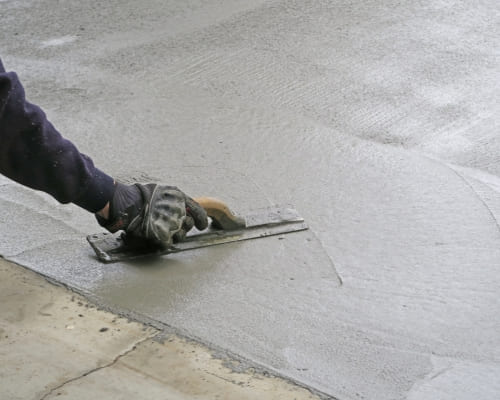
Spray-on, stencil and bonded overlays across Werribee and Wyndham, with no demolition and no new base. Assessed first, because an overlay on a moving slab is money spent twice. Call 0485 032 128.
TESTIMONIALS
What Our Stamped Concrete Customers Say About Us
The Process
3 Step Process For Your Stamped Concrete Needs

Site visit and fixed quote
It starts with a proper look at the block. The crew measures up, checks access and the lie of the ground, talks through what you want, and flags anything that could affect the pour, such as reactive clay, possible floaters or shallow rock, or drainage on low ground. For structural work that includes whether a soil test or site classification is needed. A fixed, itemised, on-site quote for the agreed scope follows, so there are no surprises later.

Preparation and pour
Good concrete is made before the truck arrives. The excavation goes to the right depth, allowing for any basalt floaters or shallow rock encountered. For slabs, paths and driveways a solid base is built and compacted, formwork is set to correct falls for drainage, and reinforcement is laid to suit the job, while holes for stumps and pier footings are bored to the depth on the engineer's details. On reactive sites the footing design follows those details. The pour is then finished to suit the job, from a broom finish, exposed aggregate or a decorative surface on a slab to a level, plumb top on a stump.

Curing, joints and clean finish
The last stage is where a lot of concrete work is won or lost. The concrete is cured deliberately, slowing surface evaporation to suit the dry, windy conditions common across the west, which helps reduce early cracking. On slabs and driveways, control joints are cut and placed to guide where any movement cracking appears, since joints control cracking rather than prevent it. Sealing is applied where it suits the finish, the site is tidied, and you are walked through curing times and how to look after new concrete in its first few weeks.
Stamped Concrete In Werribee
FREQUENTLY ASKED QUESTIONS
Everything you need to know about our Stamped Concrete In Werribee
How long does stamped concrete last?
The slab lasts as long as any correctly built concrete, which is decades, because the pattern is pressed into the concrete rather than applied to it and so cannot peel or flake away. What needs attention is the sealer, which carries the colour depth and protects the antiquing held in the pattern recesses. A stamped surface left unsealed goes flat and pale and the high points of the texture wear, while one resealed on schedule holds its appearance for a very long time. The maintenance commitment is real and worth knowing before choosing it.
Is stamped concrete slippery when wet?
The texture itself gives good grip, so the problem is almost never the stamping and almost always the sealer. A high-gloss film can glaze straight over the pattern and cancel out the grip the texture provides. Around a pool or on a sloped driveway a satin or low-sheen sealer with an anti-slip additive broadcast into it preserves the grip without flattening the look. Pattern depth also matters: a shallower emboss holds less water in its recesses and is both safer and far more comfortable on bare feet.
Can stamped concrete be laid over an existing slab?
No, and this is the most common misunderstanding about it. Stamping presses mats several millimetres into concrete that is still green, so it can only be done to a fresh pour on the day it goes down. What can be applied to an existing slab is a stencil or sprayed overlay, which gives a pattern in colour rather than in texture, stays flat, and is a resurfacing product. It is cheaper and genuinely useful on a sound tired slab, but it is a different thing being sold under similar words.
Is stamped concrete cheaper than pavers?
Usually, and the saving grows with area, because laying individual units is slow labour that scales directly with the surface while stamping covers ground quickly once the pour is down. The larger saving is over time rather than on day one. Pavers on Werribee's reactive clay develop ruts in wheel paths, rock and step against one another as the sand bed moves unevenly, and grow weeds in every joint, so they need relaying periodically. A stamped slab is washed and resealed instead.
What patterns are available?
Four families cover nearly all residential work. Flagstone uses large irregular plates with narrow joint lines and is the most forgiving across a big area. Slate is flatter with a fine riven texture. Timber-look presses plank lines and grain, which suits a deck-style alfresco. Cobblestone uses small repeated units and is the most demanding to lay well, since any misalignment between mats shows in the grid, so it suits courtyards and borders better than an open driveway. Scale should be chosen against the size of the surface.
Can a stamped slab be repaired or recoloured later?
Recolouring is straightforward, since a tinted sealer can shift the tone of the whole surface or refresh antiquing that has washed out, and it is far cheaper than any alternative. Repair is harder. Breaking out and recasting a section means re-stamping new concrete to align with the existing pattern and matching two colours on concrete of different ages, which never comes out invisible. For that reason damage is usually managed by replacing to the nearest joint lines and resealing the whole surface afterwards.
Request A Free Stamped Concrete Quote
GET A FREE QUOTE
BUSINESS
SERVICES
OPERATING HOURS
Sun: 6am - 10pm
Mon: 6am - 10pm
Tue: 6am - 10pm
Wed: 6am - 10pm
Thu: 6am - 10pm
Fri: 6am - 10pm
Sat: 6am - 10pm