Concrete Repairs Werribee, Fixed Before Replaced
Concrete repairs start with the cause, not the crack. Werribee sits on basalt-derived reactive clay that swells after rain and shrinks in the dry, and that annual cycle is what cracks slabs, lifts panels out of level and drops them again, particularly on older concrete poured without engineered footings or adequate steel. A repair that does not deal with why the slab moved has a known expiry date, so every job begins with reading the slab: whether a crack is shrinkage or structural, whether a panel is still moving, and whether a root, a downpipe or estate fill is behind it. From there the work is crack routing and sealing, trip-hazard grinding, surface repair to spalling floors, or an honest recommendation to break out and replace. Every job starts with a fixed, itemised on-site quote. Call 0485 032 128.
GET A FREE QUOTE
GET A FREE QUOTE
Peak Concreting Werribee
Concrete Repairs Werribee: Cracks, Trip Hazards and Spalling
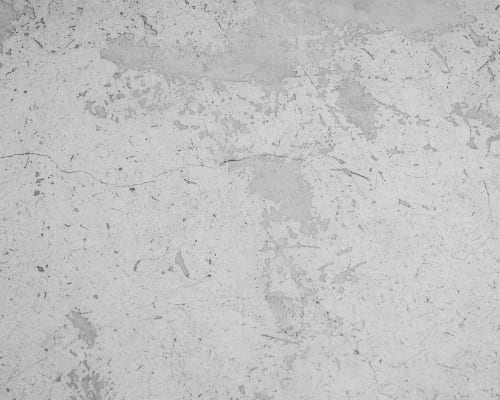
Concrete repairs Werribee properties need come in three recognisable forms, and they are not variations of one problem. A crack is a break through the slab. A trip hazard is a slab that has moved relative to its neighbour. Spalling is the surface failing while the slab beneath it stays sound. Each has a different cause, a different repair and a different answer to the question of whether repairing it will hold, which is why they are separated here rather than quoted as concrete repair.
Crack repair and joint sealing
A crack is routed out to a clean, sound edge, then filled with a flexible polyurethane or epoxy depending on whether the crack still moves. A moving crack filled with something rigid simply cracks again beside the repair, which is why the diagnosis comes before the product. Control joints are a related job: an open or perished joint sealant lets water and grit down into the slab, so resealing joints is often the cheapest work that extends a slab's life.
Spalling, pitting and flaking surfaces
Spalling is the top few millimetres breaking away, leaving a pitted, dusty surface with sound concrete underneath. It is usually a curing or finishing problem from the original pour, sometimes made worse by de-icing salts or fertiliser, and on shed and garage floors by moisture rising through an unsealed slab. Because the structure is intact the repair is a surface one, patched and rebound where it is localised, or overlaid where most of the floor has gone.
Sunken and lifted slab sections
Where one slab section sits proud of or below its neighbour, the concrete has not failed; the ground under it has. That distinction matters because it tells you the slab itself may be perfectly sound and worth keeping. A lipped edge of more than about five millimetres is a genuine trip hazard, and a sunken panel holds water that keeps the ground beneath it saturated, so the drop deepens each season rather than settling. Whether the panel moved as one piece or broke up as it went is the question that decides what can be done about it.
Peak Concreting Werribee
How a Crack or Sunken Slab Is Assessed on Reactive Clay
Every repair starts with the cause rather than the crack, because a repair that does not address why the slab moved is a repair with a known expiry date. Across Werribee the usual driver is the ground itself, with tree roots, drainage and estate fill accounting for most of the rest. The first job on site is therefore to read what the slab is telling you, and the three questions below are the ones that decide whether a repair is worth doing at all.
Why reactive basalt clay cracks slabs in Werribee
Werribee sits on basalt-derived clay that swells as it takes up water and shrinks as it dries, moving through a cycle every year. A slab on that ground is lifted at the edges in winter and dropped in summer, and older slabs poured without engineered footings or adequate steel have no capacity to resist it. The cracks that result run in a recognisable way: through the thinnest sections, across corners, and at any point where the slab is restrained.
Tree roots, settlement and estate fill
Tree roots lift slabs directly and also dry the clay beneath them, which drops the slab on the far side, so a single tree can cause both a heave and a sink within a few metres. Settlement shows up on newer estate blocks where a slab sits partly on cut ground and partly on engineered fill, since the fill keeps consolidating for years. Both leave a straight crack along the line where the two conditions meet.
Reading a crack: structural or surface only
Width, depth and whether the two sides have moved out of plane are what separate the two. A fine crack under about two millimetres with faces still flush is shrinkage, is cosmetic, and seals. A crack wider than that, or one where one side sits higher than the other, or one that passes right through a slab edge, is structural and means the ground or the reinforcement has given way. Sealing a structural crack hides a problem rather than fixing it.
Peak Concreting Werribee
Why Werribee Homeowners Choose This Concrete Repair Contractor
The easiest sale in this trade is a repair that was never going to hold. A crack filled without diagnosing why it opened looks finished on the day and reappears within a season, by which time the money is spent and the slab is no better. Peak Concreting Werribee assesses the cause before quoting the repair, and will say plainly where a repair is a false economy and replacement is the honest answer. Quotes are fixed and itemised, public liability cover runs to twenty million dollars, and anything found once the surface is opened up is agreed in writing before further work.
Twelve years of concrete repair work across Werribee and the Wyndham corridor
Twelve years of laying and repairing concrete across Melbourne's west is mostly twelve years of seeing which repairs lasted. That matters more on repair work than on new pours, because the judgement being sold is a prediction: whether this slab, on this ground, will hold a patch. Knowing how the local clay behaves through a wet winter, and which estates sit on deep fill that is still consolidating, is what makes that prediction worth anything.
Peak Concreting Werribee
What Concrete Repairs Cost in Werribee and Why They Are Quoted Per Job
Repairs run in a clear order of cost, and knowing the order is more use than a rate. Resealing control joints is the cheapest work on this page. Routing and sealing a crack is next. Grinding a trip hazard sits above that because it needs a diamond grinder on site. Lifting a sunken panel by resin or grout injection is dearer again, and breaking out and replacing a section is the dearest by a wide margin. Within that order, repairs cannot be rated per square metre, because the work is not proportional to the area. Routing and sealing six metres of crack, grinding one lipped edge, and lifting a sunken panel are three different operations with different plant, and the area involved tells you almost nothing about any of them. Repairs are therefore quoted per job after the slab has been looked at, and the two sections below explain what that quote is actually responding to.
What a repair quote depends on
Four things: what the diagnosis is, what plant the repair needs, how much of the slab is affected, and whether the cause can be dealt with at the same time. A crack seal needs a router and a gun. A trip hazard needs a grinder. A sunken panel needs breaking out or lifting gear. Dealing with the cause, whether that is a root, a downpipe discharging against the slab or a drainage fall, is usually the cheapest part and the part that decides whether the repair holds.
Why small repairs have a minimum call-out
Getting a crew, a vehicle and the right plant to site costs the same whether the job takes twenty minutes or four hours, so very small repairs carry a minimum charge rather than a per-metre rate. That is worth knowing before ringing about a single crack, because it often makes sense to deal with everything on the property in one visit. Several small repairs booked together cost considerably less than the same repairs attended separately.
Peak Concreting Werribee
Repairing Versus Replacing: Removal and a New Slab
There is a point on every failing slab where repair stops being the cheaper option, and the honest trade knows roughly where it sits. Past it, each repair buys a season and the money spent is lost rather than invested. The decision turns on how much of the slab is affected, whether the cause can be removed, and whether the slab had any reinforcement to begin with. The four sections below cover the judgement, then what replacement involves and how much of a slab actually has to go.
When a patch is a false economy
Three signs put a slab past repair. Cracking in multiple directions rather than along one line, which means the slab has lost its integrity rather than failed at a point. Movement that is still active, so any repair is under load from day one. And an original pour with no steel and no joints, which has nothing for a repair to key into. Where two of the three are present, replacement costs more once instead of repeatedly.
Breaking out and removing an old slab
An old slab is broken up with a breaker or saw-cut into liftable sections depending on access and what sits around it. Saw-cutting costs more but controls the edge, which matters where the slab abuts a house, a kerb or concrete that is staying. Any mesh or bar is cut and separated as the slab comes up. On a driveway the crossover usually stays, so the break line is cut cleanly at the property boundary.
Replacing the failed panels and keeping the rest
Replacement is rarely all or nothing. Where a slab was poured with control joints, individual panels can be saw-cut out and recast while sound panels stay, which is far cheaper than a full tear-out and is the usual answer on a driveway where two or three bays have gone. The limits are that the remaining panels must be sound and stable, and that new concrete will not colour-match the old, so the break lines are set at existing joints to read as panels rather than patches.
Pouring a replacement slab on prepared ground
The point of replacing rather than repairing is that the ground gets corrected, so the base is excavated to an even depth, any soft pocket dug out, and crushed rock compacted in layers. The new slab then gets the thickness, the steel and the control joints the original lacked, set out for the driveway, slab or path it is replacing. Falls are reset at the same time, since poor drainage is often what killed the first one.
Peak Concreting Werribee
Trip Hazard Grinding and Levelling Uneven Concrete
A lipped or uneven slab is the repair most worth doing promptly, because it is the one with a liability attached. A raised edge on a footpath or driveway in front of a property is a hazard to anyone using it, and on a commercial site it is a documented risk. Two methods deal with it without replacing the slab, and which applies depends on the size of the step and whether the panel is still moving.
Grinding down a raised edge or footpath lip
Where one panel sits proud of its neighbour, the lip is ground back with a diamond grinder to a feathered taper rather than a vertical face, so there is no edge left to catch a toe or a wheel. It is quick, needs no concrete and removes the hazard the same day. The limit is depth: grinding away more than about twenty millimetres starts to expose aggregate and thin the cover over any reinforcement, at which point the panel needs lifting instead.
Levelling uneven concrete without a full re-pour
A sunken panel that is otherwise sound can sometimes be lifted back to level by injecting a structural grout or expanding resin beneath it through small drilled ports, which fills the void the subsidence left and takes the slab back up. It suits a panel that has dropped as one piece on identifiable voiding. It does not suit a panel that has cracked up, or ground that is still actively moving, because the lift will simply reverse.
Peak Concreting Werribee
Concrete Driveway Repair, Slab Repair and Path Repair
The same three failures turn up on every surface, but what they mean and what the repair has to withstand changes with what the concrete is for. A driveway is loaded by vehicles. A shed or garage slab is often loaded by machinery and sits under a building. A path carries only feet but is walked on by people least able to cope with an uneven surface. The three sections below take each in turn.
Concrete driveway repair: cracks, edges and crossovers
Driveway repairs carry wheel loads, so a crack across the wheel path is treated differently to the same crack in a corner. Crumbling edges are the common complaint, caused by vehicles running off the slab onto unsupported ground, and the fix is to rebuild the edge and support it rather than just patch the concrete. Where the driveway meets the council crossover, work on the crossover side needs council consent.
Concrete slab repairs on sheds, garages and house slabs
Shed and garage floors fail at the surface more often than structurally, with spalling and dusting from moisture rising through an unsealed slab. Those are patched and sealed rather than broken out. A crack in a house slab is a different matter entirely: it is structural, it may be a sign of footing movement, and it warrants an engineer's opinion before any repair, because the repair is not the issue and the cause is.
Path and footpath repairs around the property
Paths are thin, usually unreinforced on older properties, and crack sooner than anything else on a block, which is why whole sections are often more economical to replace than to repair. Where a path crosses a nature strip, the repair is council infrastructure and consent applies. Around the house the common cause is a downpipe or an air-conditioning condensate line discharging beside the path, and fixing that is part of the repair.
Related Concreting Services
Spray-on, stencil and bonded overlays across Werribee and Wyndham, with no demolition and no new base. Assessed first, because an overlay on a moving slab is money spent twice. Call 0485 032 128.
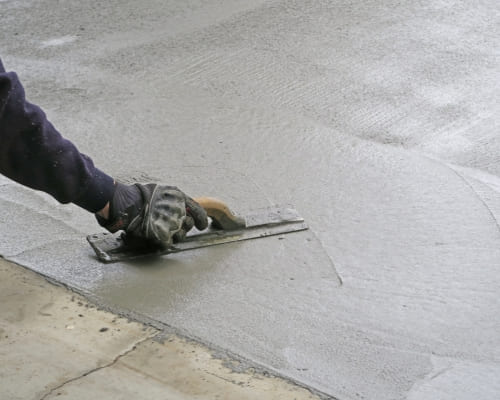
Sealing and resealing driveways, exposed aggregate and decorative concrete across Werribee and Wyndham. Preparation quoted as its own line item, because that is what decides whether a seal lasts. Call 0485 032 128.
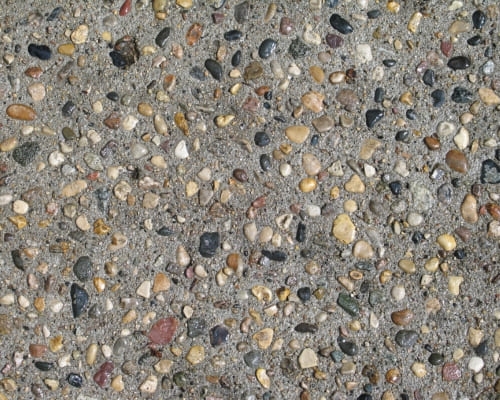
Crack repair, trip-hazard grinding, spalling floors and sunken slabs across Werribee and Wyndham. Every repair starts with diagnosing the cause, and a straight answer where replacement is the cheaper option. Call 0485 032 128.
TESTIMONIALS
What Our Concrete Repairs Customers Say About Us
The Process
3 Step Process For Your Concrete Repairs Needs

Site visit and fixed quote
It starts with a proper look at the block. The crew measures up, checks access and the lie of the ground, talks through what you want, and flags anything that could affect the pour, such as reactive clay, possible floaters or shallow rock, or drainage on low ground. For structural work that includes whether a soil test or site classification is needed. A fixed, itemised, on-site quote for the agreed scope follows, so there are no surprises later.

Preparation and pour
Good concrete is made before the truck arrives. The excavation goes to the right depth, allowing for any basalt floaters or shallow rock encountered. For slabs, paths and driveways a solid base is built and compacted, formwork is set to correct falls for drainage, and reinforcement is laid to suit the job, while holes for stumps and pier footings are bored to the depth on the engineer's details. On reactive sites the footing design follows those details. The pour is then finished to suit the job, from a broom finish, exposed aggregate or a decorative surface on a slab to a level, plumb top on a stump.

Curing, joints and clean finish
The last stage is where a lot of concrete work is won or lost. The concrete is cured deliberately, slowing surface evaporation to suit the dry, windy conditions common across the west, which helps reduce early cracking. On slabs and driveways, control joints are cut and placed to guide where any movement cracking appears, since joints control cracking rather than prevent it. Sealing is applied where it suits the finish, the site is tidied, and you are walked through curing times and how to look after new concrete in its first few weeks.
Concrete Repairs In Werribee
FREQUENTLY ASKED QUESTIONS
Everything you need to know about our Concrete Repairs In Werribee
How soon should a crack in concrete be repaired?
A fine shrinkage crack with faces still flush is cosmetic and can wait, though sealing it stops water and grit working down into it. A crack that has opened past roughly two millimetres, or where one side sits higher than the other, should be dealt with before the next wet season, for a specific reason: water entering a crack reaches the reinforcement, and once steel begins to corrode it expands and forces the crack wider from the inside. That turns a sealable crack into a spalling one. A crack that is actively widening month to month needs the cause investigated rather than the crack sealed.
Can a sunken or lifted section of driveway be fixed?
Often, and there are two methods depending on what has happened. A panel sitting proud of its neighbour can have the lip ground back to a feathered taper, which removes the hazard the same day with no concrete involved, up to a depth of roughly twenty millimetres before reinforcement cover becomes a concern. A panel that has dropped as one sound piece can sometimes be lifted by injecting structural grout or expanding resin through drilled ports to fill the void beneath it. A panel that has cracked up, or ground still actively moving, needs replacing instead.
Is it better to repair the concrete or replace it?
Three signs put a slab past repair: cracking running in multiple directions rather than along one line, movement that is still active so any repair is loaded from day one, and an original pour with no steel or joints for a repair to key into. Where two of those are present, repeated repairs cost more than replacing once. Where a slab is sound and the damage is localised, repair is clearly the better value. The assessment happens on site before any quote, and a recommendation to replace is given plainly rather than after a repair has failed.
Are spalling and flaking garage and shed floors repairable?
Yes, and they are among the more straightforward repairs because the structure is intact. Spalling is the top few millimetres breaking away, usually from a curing or finishing problem in the original pour, and on shed and garage floors it is often driven by moisture rising through a slab laid without a vapour barrier. Localised areas are patched and rebound. Where most of the floor has gone, an overlay is the better answer. In either case the moisture source is addressed first, since a surface repair over a slab still drawing damp will lift again.
Should the cause of the movement be fixed before the concrete?
Always, and it is usually the cheapest part of the job. A downpipe or air-conditioning condensate line discharging beside a slab keeps the clay under one edge permanently swollen. A tree close to the slab both lifts it with roots and dries the clay beyond it. A fall that runs water towards the house rather than away holds moisture against the slab edge. Each of those will defeat a correctly executed repair within a season or two, so they are identified at assessment and dealt with as part of the work.
Can new concrete be matched to an existing driveway?
Close, but an honest answer is that it will not be invisible. New concrete cures lighter and brighter than concrete that has weathered for years, and the colour difference narrows over the following months without ever disappearing entirely. Where appearance matters, a repair is set out so the new section finishes at an existing joint line, which reads as a panel rather than as a patch. On decorative surfaces the stone or oxide can be matched reasonably well, though a full-panel replacement always looks better than a partial one.
Request A Free Concrete Repairs Quote
GET A FREE QUOTE
BUSINESS
SERVICES
OPERATING HOURS
Sun: 6am - 10pm
Mon: 6am - 10pm
Tue: 6am - 10pm
Wed: 6am - 10pm
Thu: 6am - 10pm
Fri: 6am - 10pm
Sat: 6am - 10pm