Concrete Sealing Werribee, Sealed Against Stains
Concrete sealing is almost entirely a preparation job. The application takes a fraction of the time, and what separates a seal that lasts years from one peeling within months is whether the surface was clean, dry and open before anything went on it. Sealer bonds to sound concrete and to nothing else, so oil is degreased rather than pressure washed, failing old sealer is stripped rather than coated over, and efflorescence is acid washed and the slab dried first. Across Werribee and the Wyndham corridor that work covers new driveways once cured, exposed aggregate and decorative surfaces whose colour depends on the sealer, and pool surrounds where a film-forming product on wet bare feet is a slip risk. Penetrating, topical and tinted sealers each suit different surfaces. Call 0485 032 128.
GET A FREE QUOTE
GET A FREE QUOTE
Peak Concreting Werribee
Concrete Sealing Werribee: Driveways, Aggregate and Decorative Surfaces
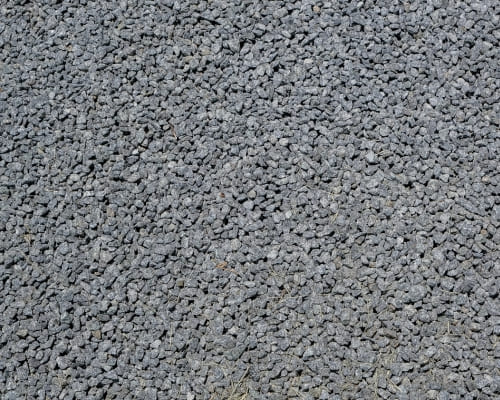
Concrete sealing Werribee surfaces need falls into three jobs with different timing and different products. Sealing a new slab is a one-off that happens at a particular point in its cure. Resealing decorative concrete is maintenance on a schedule, and skipping it is what ages exposed aggregate. Sealing paths, alfresco areas and pool surrounds is a slip-resistance question as much as a protection one. The three below are where sealer goes, and each is quoted differently because the preparation differs far more than the application.
Sealing a new driveway once it has cured
A new slab is not sealed straight away. Concrete needs time for its initial cure and for the bleed moisture to leave, and sealing too early traps that moisture and causes a milky bloom under the film that cannot be fixed without stripping it back. The usual wait is around 28 days. The first seal on a new driveway is also the easiest one, because the surface is clean, unoxidised and has never had oil or tyre marks worked into it.
Resealing exposed aggregate and decorative concrete
Decorative concrete depends on its sealer for appearance, not just protection. On exposed aggregate the sealer is what wets the stone and gives it depth, so as it wears the surface goes flat, dusty and pale, and the stone looks grey rather than coloured. The same applies to coloured and stamped work, where the sealer carries the colour's intensity. Resealing restores it, provided the old sealer is properly cleaned or stripped first.
Sealing paths, alfresco areas and pool surrounds
Around a pool or across an alfresco the sealer has a second job, because a film-forming product on a surface walked on barefoot and wet is a slip risk. These areas get either a penetrating sealer that leaves no film at all, or a topical sealer with an anti-slip additive broadcast into it. The choice is made on the surface texture as it stands, since a smooth trowelled slab needs more help than a broomed or aggregate one.
Peak Concreting Werribee
How a Concrete Sealer Is Prepared, Applied and Cured
Sealing is almost entirely a preparation job. The application itself takes a fraction of the time and is the part anyone can do; what separates a seal that lasts years from one that peels within months is what happened to the surface beforehand. Sealer bonds to clean, dry, open concrete and to nothing else, so oil, old failing sealer, efflorescence and moisture in the slab all have to be dealt with first. The four stages below are where the result is decided.
Cleaning, stripping and prep before a sealer goes on
The surface is pressure cleaned, and oil and tyre marks are degreased rather than simply blasted, because a pressure washer spreads oil through the surface instead of lifting it. Where an old topical sealer is failing it is chemically stripped or ground off completely, since new sealer over flaking old sealer takes the old film's failure with it. Efflorescence is removed with a mild acid wash, and the slab then has to dry fully before anything is applied.
Coats, coverage and how the sealer goes on
Sealer is applied by roller, by low-pressure spray, or by spray and back-roll on a textured surface where a roller alone cannot reach into the profile. Two thin coats outperform one heavy one, because a thick film traps solvent and cures unevenly, and the second coat is laid at right angles to the first so any missed line is covered. Coverage per litre drops sharply on a porous or never-sealed surface, so first-time work takes noticeably more product than a reseal.
Gloss, satin and matt finishes
Sheen is a product choice, and it is worth seeing a sample on the actual surface before committing, because the same sealer looks different on aggregate, coloured and plain concrete. High gloss gives the wet look that makes aggregate stone pop, but it shows every scuff and is the most slippery wet. Satin is the usual compromise on driveways. Matt and penetrating finishes leave the surface looking close to unsealed, which suits anyone who does not want a visible coating.
How long before you can drive or walk on it
Timing varies with the product and the weather, but as a general rule foot traffic is possible within several hours and vehicles should stay off for several days. Driving on a topical sealer before it has fully cured is the most common way a new seal is ruined, because warm tyres lift the soft film and leave permanent marks. Heat, humidity and shade all change the cure time, so the actual figures come from the product being used on the day.
Peak Concreting Werribee
Why Werribee Homeowners Choose This Concrete Sealing Contractor
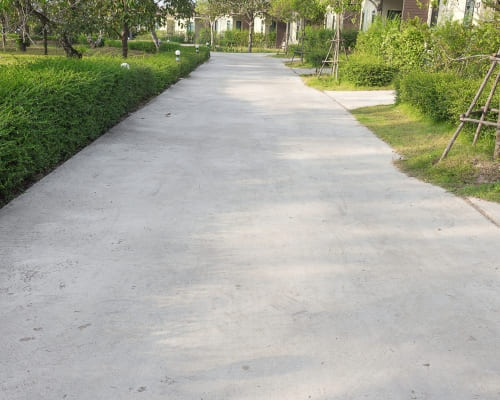
Sealing is the concrete job most often done badly, because the application is easy and the preparation is not, so the corners cut are invisible until the film starts peeling a few months later. At that point the repair is worse than the original job, since the failing sealer has to be stripped entirely before anything can go back on. Peak Concreting Werribee quotes the preparation and the application as separate line items so the part that matters is visible. Public liability cover runs to twenty million dollars, and the product and sheen are agreed in writing before work starts.
Twelve years of concrete sealing work across Werribee and the Wyndham corridor
Twelve years of concrete work across Melbourne's west includes sealing surfaces this crew poured and resealing surfaces somebody else did. The useful knowledge is about failure: what a blotchy seal, a milky bloom or a peeling film is telling you, and which of those can be recovered by cleaning rather than full stripping. Local conditions matter too, since the sun exposure on these flat open blocks and the salt air closer to Werribee South both shorten the interval between reseals.
Peak Concreting Werribee
What Concrete Sealing Costs in Werribee and Why It Is Priced Per Square Metre
Sealing is priced per square metre, and the rate is driven by preparation rather than by product, which is the opposite of what most people expect. That gives a clear order of cost: sealing a clean new slab is the cheapest work on this page, resealing a sound surface that only needs cleaning sits above it, and stripping a failed topical sealer before resealing is the dearest by a wide margin, sometimes several times the rate of a simple reseal. The two sections below explain why.
How a concrete sealing cost per square metre is worked out in Werribee
The rate covers cleaning, any degreasing or stripping, the acid wash if efflorescence is present, drying time, the sealer itself and the number of coats. Product is a surprisingly small share of it. A quoted rate that assumes the surface only needs a pressure clean will always undercut one that includes stripping, so the comparison to make between two quotes is what each assumes about the preparation rather than which sealer is named.
Why surface condition changes the price
Four conditions move it. Oil and tyre contamination needs degreasing and sometimes poulticing, and heavy contamination may never fully come out. A failing topical sealer has to be stripped completely rather than coated over. Efflorescence needs an acid wash and then a full dry. And a surface that has never been sealed will absorb considerably more product on its first coat than a reseal does, which is a real material cost rather than an estimate.
Peak Concreting Werribee
Penetrating, Topical and Colour Sealers Compared
There are three families of concrete sealer and they are not interchangeable, because they work by different mechanisms and fail in different ways. One soaks in and changes nothing visually. One sits on top and changes everything. One sits on top and adds colour. Choosing between them is the decision that determines how the surface looks, how often it needs attention, and whether it is safe wet, The sections below set out what each family does, and then why paint is not a fourth option.
Penetrating sealers that soak in and leave no film
A penetrating sealer, usually a silane or siloxane, soaks into the concrete and reacts within the pores to repel water and salts from inside the surface. Because there is no film, there is nothing to peel, scuff, cloud or go slippery, and the concrete looks essentially unsealed. The trade-offs are that it adds no gloss and no colour depth, so it does nothing for the appearance of aggregate or coloured work, and it does less against oil than a topical film.
Topical sealers that build a protective film
A topical sealer, typically acrylic or polyurethane, cures as a film on the surface. That film is what gives the wet look, deepens colour, makes stone appear rich rather than grey, and keeps oil sitting on top where it can be wiped. It is also a consumable: it wears in traffic lanes, chalks under ultraviolet light, and must be recoated periodically. Applied over a damp or contaminated slab it blooms or peels, which is why preparation matters most with this family.
Colour and tinted sealers to change the look
A tinted sealer carries pigment in the film, which can warm up grey concrete, even out blotchy colour, or shift the tone of a surface without recolouring the concrete itself. It is a genuinely useful tool on a tired slab, and far cheaper than resurfacing. The limitation is that it is a coating, so where it wears through, the original concrete shows and the contrast is obvious, and recoating is not optional once it has started to go.
Solvent-based versus water-based topical sealers
Within topical sealers the carrier matters. Solvent-based acrylics penetrate a little further, give a higher gloss and a deeper wet look, and handle cool weather better, but they carry strong odour during application and have tighter restrictions on use. Water-based products are low odour, safer to apply around an occupied house, and have improved considerably, though they generally give a slightly lower sheen. Either way, a solvent-based and a water-based sealer should not be layered over one another.
Painting versus sealing a concrete driveway
Paint and sealer are often confused and should not be. Driveway paint is an opaque coating that hides the concrete entirely, and on a trafficked surface it wears through in the wheel lanes within a few years, after which the only options are repainting or stripping. A sealer is transparent and enhances what is there rather than covering it. Where a slab is so stained or patchy that only hiding it will do, resurfacing is the longer-lasting answer.
Peak Concreting Werribee
When Concrete Needs Resealing, and How Often
Resealing is maintenance, and like most maintenance it is cheapest when it is done slightly early and most expensive when it is left until the coating has failed. The difference is not marginal: a reseal onto a sound, worn film is a clean and recoat, while a reseal onto a peeling one is a full strip. Knowing what to look for, and roughly how long a seal lasts on these flat open blocks, is what keeps a surface on the cheaper side of that line.
Signs a driveway is overdue for a reseal
Water is the simplest test. On a sealed surface it beads and sits; on an unsealed or worn one it darkens the concrete as it soaks in. Beyond that, look for the surface going flat and dusty where it used to have depth, aggregate stone looking grey rather than rich, tyre lanes visibly duller than the edges, and new stains holding rather than wiping off. Flaking, lifting or a milky white film means the coating has failed and stripping is now involved.
Typical reseal intervals in Werribee's sun and frost
A topical sealer on a driveway generally runs a few years rather than many before it needs recoating, and penetrating sealers last considerably longer because there is no film to wear. Local conditions shorten it at both ends of the year. These flat open blocks get strong unshaded summer sun, which is what chalks an acrylic film, and the plains get genuine winter frosts. Surfaces closer to Werribee South also carry salt air, which is harder on a coating again.
Peak Concreting Werribee
Sealing Against Oil Stains, Efflorescence and UV Fade
Sealing is bought for appearance and justified by protection, and it is worth being specific about what it actually protects against, because it is not a cure for everything. It is very good against oil and staining, partly effective against the white bloom that comes out of new concrete, and genuinely useful against fading. What it cannot do is stop the slab moving or stop a surface that is already failing. The three sections below separate what sealing fixes from what it does not.
Stopping oil and tyre marks soaking in
Bare concrete is porous, so oil, brake fluid, coolant and the plasticisers that leach out of warm tyres all soak straight in and stain from within, which is why those marks cannot be scrubbed out afterwards. A topical sealer keeps them sitting on the film long enough to be wiped up, which turns a permanent stain into a cleaning job. The practical consequence is that a sealed driveway needs to be cleaned promptly rather than never cleaned at all.
What causes the white bloom on new concrete
Efflorescence is salt, not sealer failure. Water moving through the slab carries dissolved lime and salts to the surface, evaporates, and leaves a white powdery or crusty deposit behind. It is most common on new concrete in its first year and worse in cool damp weather. It is removed with a mild acid wash and the slab dried before sealing, because sealing over efflorescence locks it under the film where it shows as a permanent haze.
Protecting colour and stone from UV fade
Ultraviolet light breaks down the pigments in coloured and stamped concrete and dulls the stone in exposed aggregate, and on these flat open blocks there is very little shade to slow it. A sealer with ultraviolet inhibitors takes that attack on the film rather than on the concrete, which is why a surface resealed on schedule keeps its colour for decades while an unsealed one fades within a few summers. The film itself chalks as it absorbs that exposure, and that chalking is the sealer doing its job.
Related Concreting Services
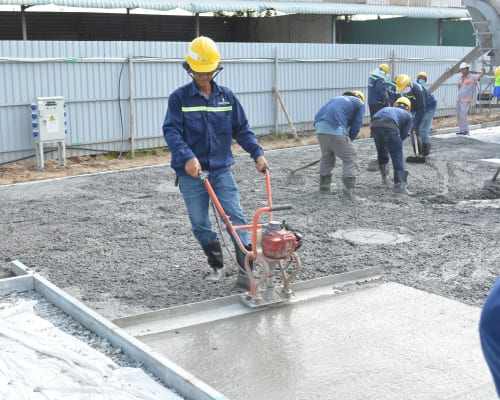
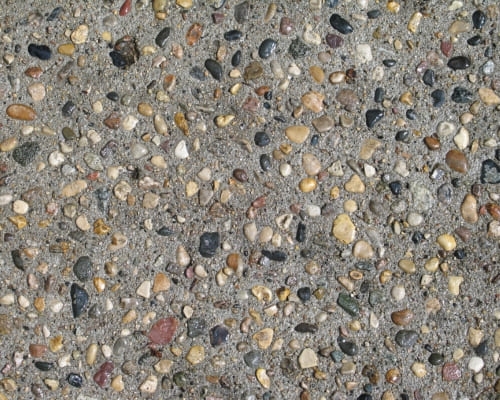
Exposed aggregate concrete for Werribee driveways, paths, alfresco and pool surrounds - washed to reveal the stone for grip and low upkeep. Compacted base, reinforced, sealed, fixed on-site quotes.
Coloured concrete driveways, paths and alfresco areas across Werribee and Wyndham, with oxide run through the mix rather than painted on. Test panel poured before the shade is committed. Call 0485 032 128.
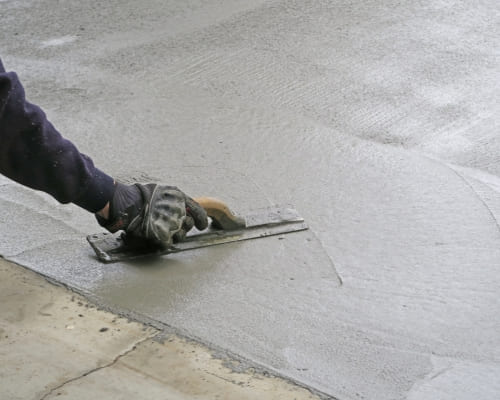
Durable concrete driveways built for Werribee's reactive basalt clay - compacted base, correct thickness, steel mesh and control joints, in plain, coloured or exposed aggregate. New crossovers and replacements across the Wyndham corridor.
TESTIMONIALS
What Our Concrete Sealing Customers Say About Us
The Process
3 Step Process For Your Concrete Sealing Needs

Site visit and fixed quote
It starts with a proper look at the block. The crew measures up, checks access and the lie of the ground, talks through what you want, and flags anything that could affect the pour, such as reactive clay, possible floaters or shallow rock, or drainage on low ground. For structural work that includes whether a soil test or site classification is needed. A fixed, itemised, on-site quote for the agreed scope follows, so there are no surprises later.

Preparation and pour
Good concrete is made before the truck arrives. The excavation goes to the right depth, allowing for any basalt floaters or shallow rock encountered. For slabs, paths and driveways a solid base is built and compacted, formwork is set to correct falls for drainage, and reinforcement is laid to suit the job, while holes for stumps and pier footings are bored to the depth on the engineer's details. On reactive sites the footing design follows those details. The pour is then finished to suit the job, from a broom finish, exposed aggregate or a decorative surface on a slab to a level, plumb top on a stump.

Curing, joints and clean finish
The last stage is where a lot of concrete work is won or lost. The concrete is cured deliberately, slowing surface evaporation to suit the dry, windy conditions common across the west, which helps reduce early cracking. On slabs and driveways, control joints are cut and placed to guide where any movement cracking appears, since joints control cracking rather than prevent it. Sealing is applied where it suits the finish, the site is tidied, and you are walked through curing times and how to look after new concrete in its first few weeks.
Concrete Sealing In Werribee
FREQUENTLY ASKED QUESTIONS
Everything you need to know about our Concrete Sealing In Werribee
Can concrete be sealed in winter, or is it a summer job?
It can be done in winter, but the weather window is narrower and it is the main reason sealing jobs get rescheduled. A sealer needs a dry slab, and on these flat plains a slab that looks dry on top can still be holding moisture from rain two days earlier, which is what causes a milky bloom under the film. Cold slows the cure, so traffic has to stay off for longer, and solvent-based products handle low temperatures better than water-based ones. Settled dry weather matters far more than the season itself.
Does sealing help with the salt in the ground around Werribee South?
It helps, and a penetrating silane or siloxane sealer is the better choice than a topical film for that specific problem. Salts attack concrete from within as water carries them into the pores, so a product that reacts inside the surface to repel water and dissolved salts is working where the damage happens. A topical film sits on top and does less about salt moving up through the slab from beneath. Closer to Werribee South, salt air also shortens the life of any topical coating, so penetrating products suit the area on both counts.
Will sealing make concrete slippery?
A high-gloss topical sealer genuinely is slippery when wet, which matters most around a pool, on a sloped driveway and anywhere walked on barefoot. There are two straightforward answers. A penetrating sealer leaves no film at all, so the surface keeps exactly the slip resistance it already has. Or a topical sealer can have an anti-slip additive broadcast into it, which barely changes the appearance. Sheen also helps, since satin and matt finishes are less slick than high gloss. The choice is made on the surface texture as it stands.
Does sealing stop concrete from cracking?
No, and it is worth being clear about that. Cracking is caused by the slab moving, usually because Werribee's reactive clay swells and shrinks beneath it, and nothing applied to the surface changes what the ground does. What sealing does is keep water out of the concrete, which slows the secondary damage that follows a crack, since water reaching reinforcement starts corrosion that forces the crack wider from inside. So sealing protects a sound slab and limits deterioration in a cracked one, but it is not a structural product.
Is sealing a concrete driveway a DIY job?
The application is genuinely straightforward and plenty of people do it well. The preparation is where DIY jobs come unstuck, because it is the part that looks optional. Pressure washing spreads oil through a surface rather than lifting it, so contamination needs degreasing. An old film that is beginning to fail has to be stripped completely rather than coated over. And efflorescence has to be acid washed and the slab dried fully first. Where any of those three apply, the cost of getting it wrong is stripping the whole surface back and starting again.
Can blotchy or peeling concrete be stripped and resealed?
Yes, and it is the most common reseal request. Blotchiness and peeling both mean the existing film has failed, usually because it went on over a damp or contaminated surface, so coating over it simply inherits the problem. The old sealer is chemically stripped or ground off completely, the surface is degreased and acid washed as needed, then allowed to dry fully before new sealer goes on. It costs considerably more than a straightforward reseal, which is why the stripping is quoted as its own line rather than buried in a rate.
Request A Free Concrete Sealing Quote
GET A FREE QUOTE
BUSINESS
SERVICES
OPERATING HOURS
Sun: 6am - 10pm
Mon: 6am - 10pm
Tue: 6am - 10pm
Wed: 6am - 10pm
Thu: 6am - 10pm
Fri: 6am - 10pm
Sat: 6am - 10pm