Concrete Resurfacing Werribee, Not a Full Replacement
Concrete resurfacing bonds a new wearing surface over the slab already there, so there is no demolition, no cartage and no new base to pay for. On the right slab it is excellent value, and the right slab is a specific thing: structurally sound, draining correctly, not moving, and tired only at the surface. That describes a great many driveways and alfresco areas across the older parts of Werribee and Hoppers Crossing, faded and chalky from years of unshaded sun with tyre staining worked into them. Spray-on coatings, stencil patterns and trowelled bonded overlays each suit different conditions. Where a slab is cracked through, lipped between panels or still moving, an overlay will fail with it, and that gets said plainly at the inspection rather than after the coating is paid for. Call 0485 032 128.
GET A FREE QUOTE
GET A FREE QUOTE
Peak Concreting Werribee
Concrete Resurfacing Werribee: Spray-On, Stencil and Bonded Overlays
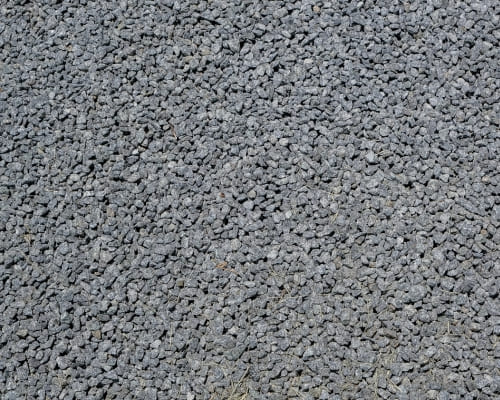
Concrete resurfacing Werribee slabs get is a new wearing surface bonded over the old one, which means no demolition, no cartage and no new base. The systems differ in how thick they go on and what they can disguise, and that is the whole decision. A thin spray-on coating follows the slab beneath it exactly. A trowelled overlay has enough body to even out minor surface defects. The four sections below cover the systems and the patterns available in each.
Spray-on concrete resurfacing
Spray-on resurfacing is a polymer-modified cementitious coating applied through a hopper gun in thin coats, typically a few millimetres in total. The texture comes from the spray itself, which gives a consistent, slightly mottled surface with good slip resistance. Because it is thin it bonds hard and will not debond on a sound slab, but it also follows the existing profile faithfully, so any lipping, dishing or trowel marks beneath it stay visible in the finished surface.
Stencil patterns and borders
Stencilling lays an adhesive paper pattern onto the prepared slab, sprays the coating over it, and lifts the paper to leave the pattern lines showing the base colour beneath. The result reads as pavers, brick or tile without any joints to weed or settle. Borders in a contrasting colour are set out the same way and are what make a stencilled driveway look designed rather than printed. Pattern scale matters: a large format suits a wide driveway, a smaller one suits a path.
Bonded cement overlays and skim coats
A bonded overlay is trowelled rather than sprayed and goes on thicker, which gives it enough body to fill minor low spots, feather out old trowel marks and leave a genuinely smooth surface. Skim coats are the thinnest version, used where the slab is already flat and only the appearance needs renewing. Both need a mechanically prepared, primed surface to key into, and both can be finished smooth, broomed or trowelled to suit the use.
Colour and pattern choices for an overlay
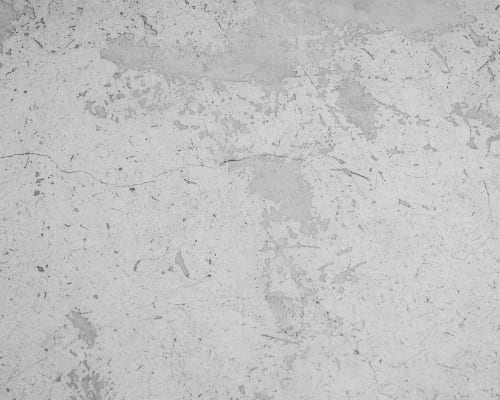
Overlay colour is pigmented into the coating, so the range is wider than integral concrete oxides and the tones can be lighter. Two colours are commonly used together, a base and a contrasting border or stencil line. The practical constraint is that an overlay sits on top, so where it eventually wears through, the grey slab beneath shows, which is why colour choices close to the base concrete are more forgiving over time than dramatic ones.
Peak Concreting Werribee
Preparing and Resurfacing Sun-Damaged, Stained Werribee Concrete
An overlay is only as good as its bond, and the bond is made in the preparation. A coating laid over a sealed, oily or dusty slab lifts in sheets within a year or two, and at that point the slab is worse off than before because the failed coating has to come off entirely. On these flat open blocks the common conditions are ultraviolet damage, tyre staining and surface dusting, and each is dealt with differently before anything goes down.
Grinding, cleaning and priming before an overlay goes down
Any existing sealer is ground or stripped off completely, because an overlay cannot bond through a film. The slab is then mechanically abraded to open the surface, which is what gives the coating something to key into, and oil is degreased rather than pressure washed, since washing spreads it. After cleaning the slab dries fully, then a primer or bonding slurry goes on. That primer is the step most often skipped, and it is the one that decides whether the overlay stays attached.
Repairing cracks and spalling before resurfacing
Cracks are repaired before an overlay, not covered by one, because a crack that still moves will telegraph straight through a few millimetres of coating within a season. Static shrinkage cracks are routed and filled flush. Spalled and pitted areas are patched back to level so the overlay has a consistent thickness. What this step cannot do is stop an actively moving crack, which is the main reason some slabs are not resurfacing candidates at all.
How long a resurfaced driveway takes to cure and use
Most systems take foot traffic within a day and vehicles after several days, with sealing applied once the coating has cured. The whole job typically runs over several days rather than one, because preparation, repairs, the coating itself and the sealer each need their own time. Weather governs it more than anything, since an overlay cannot go down on a damp slab or be rained on while curing, so winter work waits for a settled window.
Peak Concreting Werribee
Why Werribee Homeowners Choose This Resurfacing Contractor
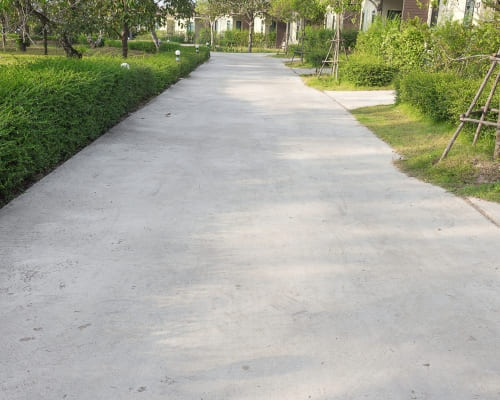
Resurfacing is sold as the cheap alternative to replacement, and on the right slab it genuinely is. On the wrong slab it is money spent twice, because a coating over a moving or failing slab fails with it and then has to be removed before the slab can be replaced. Peak Concreting Werribee assesses the slab before quoting the overlay and will say plainly where replacement is the better value, rather than taking the easier sale. Quotes are fixed and itemised with the preparation listed separately, and public liability cover runs to twenty million dollars.
Twelve years of resurfacing and concreting across Werribee and the Wyndham corridor
Twelve years of concrete work across the Wyndham corridor means seeing both the slabs that were resurfaced and the ones that should have been replaced. The older streets of Werribee, Hoppers Crossing and Altona hold most of the genuine candidates, sound slabs tired only at the surface, while the newer estates at Tarneit, Truganina and Wyndham Vale throw up the opposite problem of young concrete already moving on fill that is still consolidating. The judgement being sold on this page is a prediction about whether a slab will stay still, and that comes from knowing how the local clay loads a slab through a wet winter and which estates sit on fill that is still consolidating. The same experience is what makes a recommendation to replace credible rather than a soft upsell.
Peak Concreting Werribee
What Concrete Resurfacing Costs in Werribee and Why It Is Priced Per Square Metre
Resurfacing is priced per square metre, and the order of cost within it is clear: a plain spray-on coating over a sound, unsealed slab is the cheapest work on this page, a stencil pattern with a contrasting border sits above it for the extra set-out and masking, and a trowelled bonded overlay is the dearest of the three. All three sit well below replacing the same area in new concrete, because the base, the excavation and the cartage are already paid for. Preparation is the variable.
How a resurfacing cost per square metre is worked out in Werribee
The rate covers grinding or stripping the old surface, degreasing, crack and spall repairs, the primer, the coating in the chosen system and number of coats, any stencil set-out and masking, and the sealer. Preparation is often the larger half. A quote that assumes the slab needs only a pressure clean will always undercut one that includes stripping an old sealer, so the useful question is what each quote assumes about the slab rather than which product it names.
Why preparation is often the larger half of the quote
On a slab that has been sealed, the grinding or chemical stripping to get that film off can cost more than the coating that follows it, because it is slow work over the whole area and it generates waste to remove. Degreasing, crack routing and spall patching add to it. That is why two quotes on the same driveway can differ substantially: one has assumed a pressure clean and a prime, the other has priced stripping a failing sealer back to bare concrete.
Peak Concreting Werribee
Resurfacing Versus Replacing a Concrete Driveway
The choice between resurfacing and replacing is not really about budget; it is about whether the slab underneath has a future. A sound slab with a tired surface is the ideal resurfacing candidate and replacing it is waste. A slab that is moving, cracked through or sitting unevenly will take any overlay down with it, and resurfacing it means paying twice. The two sections below cover how the long-term arithmetic works and what an overlay genuinely cannot disguise.
When replacing the slab is the cheaper decision long term
Replacement wins whenever the overlay has a realistic chance of failing, because its cost is then additive rather than alternative: the coating is paid for, it fails, it has to be removed, and the slab is replaced anyway. On a slab with active movement that is the likely outcome. Replacement also wins where levels or falls are wrong, since an overlay a few millimetres thick cannot regrade a slab that drains towards the house.
What an overlay does and does not hide
An overlay reliably hides discolouration, staining, surface dusting, ultraviolet damage, minor pitting and old patch marks, which together account for most of what makes a slab look past it. It does not hide lipping between panels, dishing or ponding, or an actively moving crack, all of which telegraph through within a season. A trowelled overlay can even out minor surface irregularity; nothing in this family corrects a slab's shape or its levels.
Peak Concreting Werribee
Which Slabs Can and Cannot Be Resurfaced
Every resurfacing job starts with the same question, asked of the slab rather than the owner: is this surface going to stay still and stay attached. Two conditions have to hold. The slab must be structurally sound and stable, and its surface must be capable of taking a bond once prepared. Where both hold, an overlay is excellent value. Where either fails, it is a coating with a short life, so the two sections below set out which slabs fall where.
Cracked, sunken or moving slabs that need replacing instead
Four conditions rule a slab out. Cracks that are still opening, since movement telegraphs through any coating. Panels that have lipped or sunk relative to one another, because an overlay cannot bridge a step. Widespread cracking in multiple directions, which means the slab has lost its integrity. And severe delamination where the top of the slab is already debonding from itself, since there is nothing sound left to bond to. Any of those four means replacement.
How to tell whether a slab is still sound
Three checks settle it. A straightedge or a long level across the panel joints shows whether anything has lipped or dished, which an overlay cannot bridge. Tapping across the surface with a hammer finds delamination, since sound concrete rings and debonded concrete sounds hollow. And marking the ends of a crack and looking again after a wet winter and a dry summer shows whether it is still opening. A slab that passes all three is an excellent candidate whatever it looks like.
Peak Concreting Werribee
Resurfacing Driveways, Paths, Pool Surrounds and Alfresco Areas
The same overlay systems go down on four different surfaces, and what changes is what the finish has to survive. A driveway takes vehicle weight and hot tyres. A path takes feet and gets walked on in the wet. A pool surround is the one place slip resistance outranks appearance. An alfresco or garage floor is under cover, which changes both the wear and the options. The four sections below take each in turn.
Resurfacing a driveway and crossover
A driveway overlay has to handle wheel loads, turning tyres and the plasticisers that leach out of warm rubber, so the coating is sealed with a product rated for vehicle traffic rather than a decorative one. Wheel lanes wear first and show it, which is worth knowing when choosing a colour. Where the driveway meets a council crossover, the overlay stops at the property boundary, since work on the crossover itself needs council consent.
Resurfacing paths and side access
Paths are the cheapest surfaces to resurface and often the most worthwhile, because a tired path drags down the look of everything around it. The finish is kept textured rather than smooth, since a path is walked on wet and often by people least steady on their feet. The practical limitation on side access is width: a narrow run between house and fence is awkward for grinding plant, which affects the preparation more than the coating.
Resurfacing a pool surround so it stays non-slip
Around a pool, texture is a safety requirement rather than a preference, which actually suits resurfacing well, because a sprayed finish has good inherent slip resistance. The sealer is where it goes wrong: a high-gloss decorative sealer on a pool surround is genuinely dangerous underfoot, so a low-sheen product with an anti-slip additive is used instead. Overlays also handle pool chemistry and constant wetting better than most decorative finishes.
Resurfacing a garage or alfresco floor
Under cover the coating is out of the ultraviolet light and out of the rain, so it keeps its colour far longer and a smoother, more decorative finish becomes viable. Garage floors need the same vehicle-rated sealer a driveway does, plus attention to any moisture rising through an unsealed slab, since an overlay will not bond over a slab drawing damp. On an alfresco the usual choice is a trowelled overlay, because the smoother finish reads as an indoor floor.
Related Concreting Services
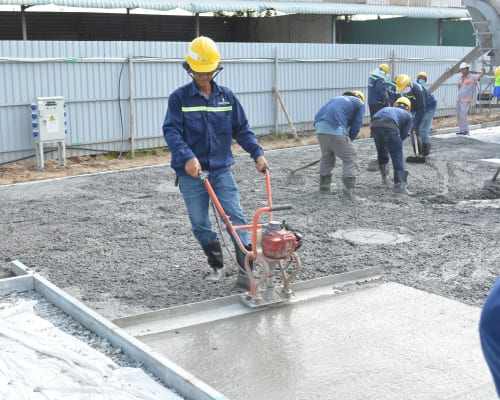
House slabs, shed floors and strip and pad footings poured to AS 2870 for Werribee's reactive basalt clay. Site classification first, engineered design to follow, fixed on-site quotes across the Wyndham corridor.
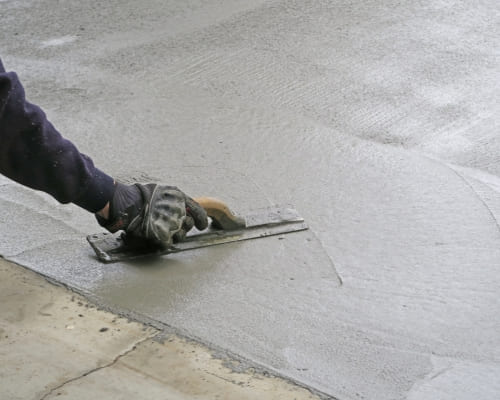
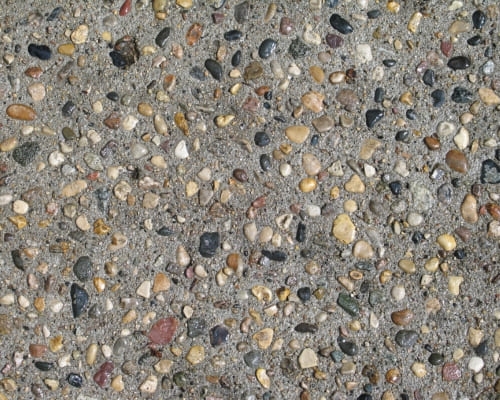
Durable concrete driveways built for Werribee's reactive basalt clay - compacted base, correct thickness, steel mesh and control joints, in plain, coloured or exposed aggregate. New crossovers and replacements across the Wyndham corridor.
Crack repair, trip-hazard grinding, spalling floors and sunken slabs across Werribee and Wyndham. Every repair starts with diagnosing the cause, and a straight answer where replacement is the cheaper option. Call 0485 032 128.
TESTIMONIALS
What Our Concrete Resurfacing Customers Say About Us
The Process
3 Step Process For Your Concrete Resurfacing Needs

Site visit and fixed quote
It starts with a proper look at the block. The crew measures up, checks access and the lie of the ground, talks through what you want, and flags anything that could affect the pour, such as reactive clay, possible floaters or shallow rock, or drainage on low ground. For structural work that includes whether a soil test or site classification is needed. A fixed, itemised, on-site quote for the agreed scope follows, so there are no surprises later.

Preparation and pour
Good concrete is made before the truck arrives. The excavation goes to the right depth, allowing for any basalt floaters or shallow rock encountered. For slabs, paths and driveways a solid base is built and compacted, formwork is set to correct falls for drainage, and reinforcement is laid to suit the job, while holes for stumps and pier footings are bored to the depth on the engineer's details. On reactive sites the footing design follows those details. The pour is then finished to suit the job, from a broom finish, exposed aggregate or a decorative surface on a slab to a level, plumb top on a stump.

Curing, joints and clean finish
The last stage is where a lot of concrete work is won or lost. The concrete is cured deliberately, slowing surface evaporation to suit the dry, windy conditions common across the west, which helps reduce early cracking. On slabs and driveways, control joints are cut and placed to guide where any movement cracking appears, since joints control cracking rather than prevent it. Sealing is applied where it suits the finish, the site is tidied, and you are walked through curing times and how to look after new concrete in its first few weeks.
Concrete Resurfacing In Werribee
FREQUENTLY ASKED QUESTIONS
Everything you need to know about our Concrete Resurfacing In Werribee
Is resurfacing cheaper than replacing a concrete driveway?
Considerably, on a slab that suits it, because replacement carries four costs an overlay avoids entirely: breaking out the old slab, carting the broken concrete away, excavating and recompacting the base, and the volume of new concrete. An overlay is a few millimetres of material over groundwork already paid for. The saving disappears completely if the slab underneath turns out to need replacing anyway, since the coating is then paid for, fails, has to be removed, and the slab is replaced regardless. That is why the assessment comes before the quote.
How long does a resurfaced driveway last?
The coating is a wearing surface, so its life depends on traffic and on the sealer being maintained rather than on the overlay itself failing. Wheel lanes wear first and show it before the rest of the surface does. Resealing on schedule is what extends it, much as with any decorative concrete, and a surface left unsealed will chalk and wear through in the traffic lanes considerably sooner. What does not change is the slab beneath, which keeps whatever structural life it had before the overlay went on.
Can a cracked concrete driveway be resurfaced?
It depends entirely on whether the crack still moves. A static shrinkage crack is routed out, filled flush and then covered, and it will not come back through. A crack that is still opening will telegraph through a few millimetres of coating within a season, because nothing applied to the surface stops the slab moving beneath it. Widespread cracking in several directions means the slab has lost its integrity and is a replacement rather than a resurfacing job. Which category a crack falls into is assessed on site before any work is quoted.
Will an overlay hide stains and sun damage?
Reliably, yes, and that is most of what makes a slab look finished. Discolouration, oil and tyre staining, surface dusting, ultraviolet chalking, minor pitting and old patch marks all disappear under an overlay. What it will not hide is the shape of the slab: lipping between panels, dishing, ponding, or falls running the wrong way all remain, because an overlay is a few millimetres thick and follows the profile beneath it. A trowelled overlay evens out minor surface irregularity but corrects no levels.
How long before a resurfaced driveway can be driven on?
Foot traffic is usually fine within a day and vehicles after several days, with the sealer applied once the coating has cured. The whole job normally runs across several days rather than one, since the preparation, any crack repairs, the coating and the sealer each need their own time. Weather governs the schedule more than anything else, because an overlay cannot go down on a damp slab or be rained on while curing, so winter work waits for a settled dry window rather than being pushed through.
Can a stencilled or patterned finish be put over plain concrete?
That is one of the main reasons people resurface. A stencil pattern lays an adhesive paper template onto the prepared slab, the coating is sprayed over it, and lifting the paper leaves the pattern lines showing the base colour through. The result reads as pavers, brick or tile with none of the joints that weed, settle or rock. A contrasting border set out the same way is what makes it look designed rather than printed, and pattern scale is chosen to suit the width of the surface.
Request A Free Concrete Resurfacing Quote
GET A FREE QUOTE
BUSINESS
SERVICES
OPERATING HOURS
Sun: 6am - 10pm
Mon: 6am - 10pm
Tue: 6am - 10pm
Wed: 6am - 10pm
Thu: 6am - 10pm
Fri: 6am - 10pm
Sat: 6am - 10pm