Concrete Kerbs Werribee, Edging That Holds Its Line
Concrete kerbs give a driveway, a garden bed or a lawn a permanent hard line that will not rot, rust or wander. Across Werribee and the Wyndham corridor that line has to be laid on basalt-derived reactive clay, and a kerb has the smallest cross-section of any concrete job, so it has almost no capacity to bridge ground moving unevenly beneath it. Kerbing here is trimmed to a consistent depth, laid on a compacted free-draining base, haunched behind so it cannot roll under load, and jointed at close spacings so shrinkage cracks land where someone chose. Machine-laid runs suit long borders and estate roads, while curves, corners and tight back yards are hand-formed. Garden edging, mowing strips, driveway kerbs and commercial profiles all start with a fixed, itemised on-site quote. Call 0485 032 128.
GET A FREE QUOTE
GET A FREE QUOTE
Peak Concreting Werribee
Concrete Kerbs Werribee: Garden Edging, Driveway Edging and Mowing Strips
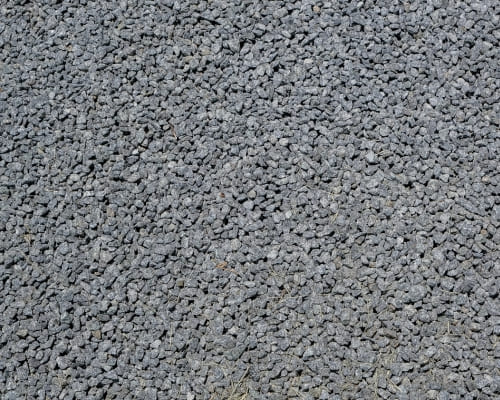
Concrete kerbs Werribee properties need do one of five jobs, and the profile, the thickness and the reinforcement all follow from which. Holding a garden bed back is a retaining job at small scale. Edging a driveway is a load job. A mowing strip is a surface a wheel runs along. Kerbing a car park or an estate road answers to a specification rather than to taste, and a council road kerb answers to a standard drawing. The runs below are the ones that come up across the Wyndham corridor, and none of them is priced the same way.
Garden bed edging
Garden edging gives mulch, soil and lawn a hard line that will not rot, rust or wander. It is formed thinner than a driveway kerb but still needs a compacted base and joints, because a thin unjointed strip laid straight onto clay is the quickest thing on a property to crack. The usual profile stands slightly proud of the lawn to hold mulch in, with the garden side higher than the grass side so bark does not wash out across the turf.
Mowing strips that take a mower wheel
A mowing strip is set flush with the lawn so a mower wheel can run along it and cut right to the edge, which removes the whipper-snipping entirely along that run. Flush means level with the turf rather than level with the soil, so the strip is set about the thickness of the grass below the mower's cutting height. Width matters more than people expect: anything under about 150 millimetres is too narrow for a wheel to track along reliably.
Driveway and crossover edging
A kerb along a driveway is doing structural work, holding the slab edge and taking the weight of a wheel that strays off it. These runs get steel and extra thickness, and they are haunched behind so the kerb cannot roll outwards under load. Where the kerb meets a council crossover the levels and the profile have to match what is already there, which is the detail that decides whether the junction looks deliberate or patched.
Kerbing for commercial car parks
Car park kerbing is specified rather than chosen, with the profile, the mix strength and the reinforcement set by the drawings. These kerbs do two jobs at once, acting as wheel stops and as the drainage line, so the top level and the fall along the run are set off the finished surface levels of the pavement rather than off the ground. Laybacks are formed at every entry and at each accessible bay, and those positions come from the line marking plan.
Estate and council road kerbing to standard
Road kerbing is built to the responsible authority's standard drawing, which fixes the profile, the concrete strength, the depth of the channel and the jointing, with no latitude for preference. Across the Wyndham growth corridor that means kerb and channel cast as one unit, set to the design levels of the road so the channel carries stormwater to the pits. Runs are machine-laid and surveyed to level, and the work is inspected against the standard before the pavement goes in.

Peak Concreting Werribee
Poured and Machine-Laid Kerbing on Werribee's Reactive Clay
Kerbing is laid one of two ways, and the choice is made by the shape of the run rather than by preference. A machine extrudes a continuous kerb at walking pace and gives a uniform profile no hand-forming can match over distance. Hand-forming wins wherever the run stops being simple. Either way the kerb is a long thin strip of concrete on reactive clay, which is the hardest shape to keep straight on this ground, so what goes underneath decides the outcome.
Machine-laid continuous kerbing for long runs
A kerbing machine extrudes a stiff, low-slump mix through a mould and leaves a finished profile behind it in one pass, with no formwork to set up or strip. The result is dimensionally consistent over long distances and quick, which is why estate roads, car parks and long garden borders are done this way. The machine needs a clear, trimmed, compacted run to track along, so the preparation is more exacting than for hand-formed work rather than less.
Hand-formed kerbs for curves and tight access
Hand-forming takes over where a machine cannot go: tight radius curves, corners, step-downs, transitions into existing concrete, and any run a machine cannot physically reach, which on built-out blocks is most back and side yards. Formwork is set to the curve, the concrete is placed and the profile is worked by hand. It is slower per metre and costs more, but it is the only way to get a true line around a curved garden bed or a circular feature.
Why kerbs crack and lift on reactive clay
A kerb has a small cross-section and very little reinforcement, so it has almost no capacity to bridge ground that moves unevenly beneath it. Werribee's basalt-derived clay swells after rain and shrinks in the dry, and a kerb laid on uncompacted soil simply follows that movement until it cracks, usually in a regular pattern wherever a joint should have been. Trimming to a consistent depth, compacting a free-draining base, and jointing at sensible spacings are what stop it.
Peak Concreting Werribee
Why Werribee Homeowners Choose This Kerbing Contractor
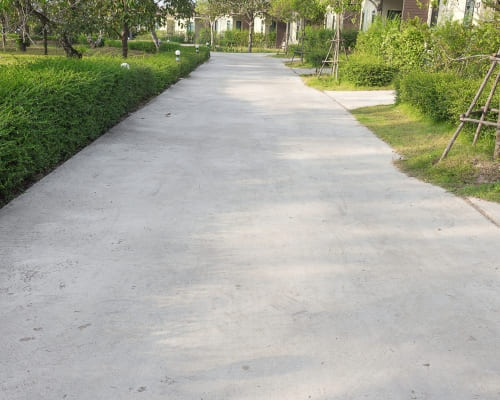
Kerbing is the job most often thrown in as a line item at the end of a bigger quote, which is how it ends up laid on untrimmed ground with no joints and no base. It is also the most visible concrete on a property, running the full length of a driveway or garden at eye level from the footpath, so a wandering line or a stepped crack shows permanently. Peak Concreting Werribee quotes kerbing fixed and itemised, with the trimming, the base, the reinforcement, the profile and the jointing listed separately. Public liability cover runs to twenty million dollars, and anything the ground forces to change is agreed in writing first.
Twelve years of kerbing work across Werribee and the Wyndham corridor
Twelve years of concrete work across Melbourne's west covers both kerbing methods: machine-laid runs on estate roads and long borders, and hand-formed profiles around curved beds and tight back yards. The experience that matters on kerbing is judging which method a run actually suits before quoting it, because a job quoted as machine-laid and then hand-formed on the day costs the contractor or the customer. Knowing where the basalt plains hide floaters in a trimming line is the other half of it.
Peak Concreting Werribee
What Concrete Kerbing Costs in Werribee and Why It Is Priced Per Lineal Metre
Kerbing is priced per lineal metre rather than per square metre, because it is the length of the run that drives the work while the cross-section stays much the same. That makes kerbing unusual among concrete jobs: the quantity is a measurement anyone can take with a tape, and the rate is where all the variation sits. Two quotes for the same number of metres can differ substantially and both be honest, because the profile, the method and the ground are doing the work the number hides.
How a kerbing cost per lineal metre is worked out in Werribee
The rate is built from trimming and spoil removal, the compacted base, any steel, the concrete at the chosen profile's cross-section, the labour for the method used, and the joint cutting. Machine-laid work has a lower labour rate per metre but a setup and float cost that only long runs absorb, so short runs are cheaper hand-formed. A quoted rate that omits trimming or base preparation will always undercut one that includes them.
What changes a kerbing quote: length, profile and access
Length decides whether machine-laying is viable at all and spreads the fixed costs. Profile sets the concrete volume and the labour, so a dwarf wall kerb is several times a flush mowing strip per metre. Access decides the method, since a machine cannot reach most back yards. Curves add labour on any method. On the basalt plains, floaters turning up in a trimming line add machine time, which is why that possibility is flagged at quoting stage rather than mid-run.
Peak Concreting Werribee
Poured Kerbs Versus Precast, Timber and Plastic Edging
Edging has more alternatives than almost any other concrete job, and three of them compete seriously. Precast concrete competes on the same material with a different install. Timber and steel compete on price and on being able to be put in by the homeowner. Plastic competes on cost alone. Each loses to a poured kerb on a different axis, which is worth setting out plainly rather than dismissing the lot.
Poured kerbs versus precast concrete kerbs
Precast units are made under factory conditions and arrive at a known strength, which is a genuine advantage, but they are individual pieces bedded in mortar or sand with a joint every unit. On reactive clay those joints are where the line breaks first, and a precast run cannot follow a curve without either a radius unit or a visible faceted line. A poured kerb is continuous, takes any curve, and has joints only where they are cut deliberately.
Why timber and steel edging fails sooner
Timber edging looks tidy on install and is cheap, but it is organic with one face permanently against wet soil, so it rots and gets eaten out, faster in the damp low spots across these plains. Steel edging is neat and thin but corrodes at the soil line, dents when a mower clips it, and lifts at the ends once the ground moves. Neither holds any real load, so neither can edge a driveway or retain more than a shallow bed.
Why plastic edging goes brittle and lifts
Plastic edging is the cheapest option and the only one a homeowner can install in an afternoon, which is its whole case. Ultraviolet exposure makes it brittle within a few summers, and once brittle it cracks rather than flexes when a wheelbarrow or mower hits it. It is held by pegs into the same reactive clay that moves, so it lifts and waves out of line, and it offers no edge a mower wheel can run along.
Peak Concreting Werribee
Kerb Profiles: Flush, Battered, Layback, Dwarf Wall and Pin Kerb
Profile is the shape of the kerb in cross-section, and it is the decision that sets both the price and whether the kerb can do its job. A kerb meant to be mown over, one meant to stop a wheel, one meant to let a wheel across, and one meant to hold soil back are four different shapes. Choosing a profile for looks and then discovering it cannot take a vehicle is the common mistake, so the five below are set out by what each is for.
Flush kerbs and mowing-strip profiles
A flush kerb sits level with the surfaces either side, so nothing is raised to trip on or catch a mower. It is the profile for mowing strips and for any border crossed on foot, and it is the cheapest per metre because the cross-section is small and there is nothing to form above ground level. What a flush kerb cannot do is contain anything, so it will not hold mulch in or stop a wheel leaving a driveway.
Battered and layback kerbs for vehicle access
A battered kerb has a sloped face rather than a vertical one, which lets a wheel ride up and over without damage and sheds water towards the channel. A layback is the flattened section formed deliberately where a vehicle is meant to cross, as at a crossover or a car park entry. Both exist to manage vehicles instead of resisting them, and both are set off the levels of the pavement they serve rather than the ground.
Dwarf wall kerbs and raised garden edges
A dwarf wall kerb stands well proud of the ground and is doing light retaining work, holding a raised bed or a level change of a few hundred millimetres. It carries steel and a wider footing than other profiles, and the cost per metre reflects that. Past roughly half a metre of retained height it stops being a kerb and becomes a retaining wall, with the footing, drainage and possible permit that go with one.
Pin kerbs and drop kerbs explained
A pin kerb is a narrow upstand set as a boundary marker or a mower edge, pinned into the ground rather than sitting on a substantial footing, and it suits light separation work where nothing loads it. A drop kerb is the lowered section cut or formed into an existing raised kerb to let a vehicle or a wheelchair across. On a council kerb that is consented work with a specified profile, not something altered on the homeowner's say-so.
Peak Concreting Werribee
How a Concrete Kerb Is Laid: Mix, Haunching and Joints
The three details that separate a kerb still holding its line in ten years from one cracked and leaning in two are all invisible once the job is finished. The mix is different from slab concrete. There is concrete behind the kerb that nobody sees. And the joints decide where the inevitable shrinkage goes. Any kerb quote that does not mention all three is pricing something less than a kerb, which is why they are set out here rather than left as trade detail.
The kerbing mix and why it is drier than slab concrete
Extruded and hand-formed kerbs use a stiff, low-slump mix, because the profile has to stand up the moment it leaves the mould or the form rather than flow level like a slab. That dry mix is harder to work and less forgiving of delay, and it needs proper curing afterwards since there is little spare water in it. A wetter mix is easier to place and will slump at the edges, which is what gives a kerb a rounded, sagging top.
Haunching behind the kerb
Haunching is the wedge of concrete placed behind the back face, and it is what stops a kerb rolling outwards when soil swells or a wheel loads the front. Without it a kerb is a thin upstand resting on its own base, free to tilt. The haunch is why a properly laid kerb uses noticeably more concrete than its visible cross-section suggests, and why it is the first thing left out when a price is being cut.
Control joints and finishing the top edge
Joints are cut or tooled at regular spacings so shrinkage cracking lands on a line somebody chose, and on a long thin kerb those spacings are closer than on a slab. A joint has to pass through the full depth to control anything. The top edge is then tooled to a small radius rather than left sharp, because a sharp arris chips the first time anything hits it and a chipped kerb looks old immediately.
Related Concreting Services
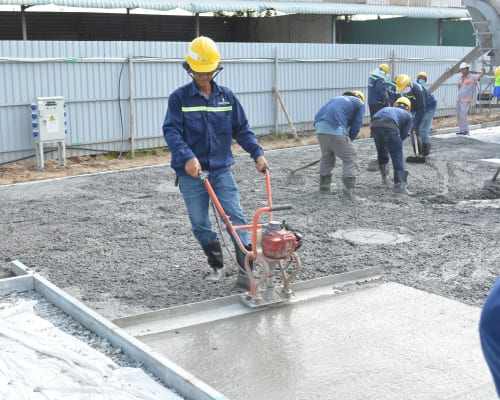
Durable concrete driveways built for Werribee's reactive basalt clay - compacted base, correct thickness, steel mesh and control joints, in plain, coloured or exposed aggregate. New crossovers and replacements across the Wyndham corridor.
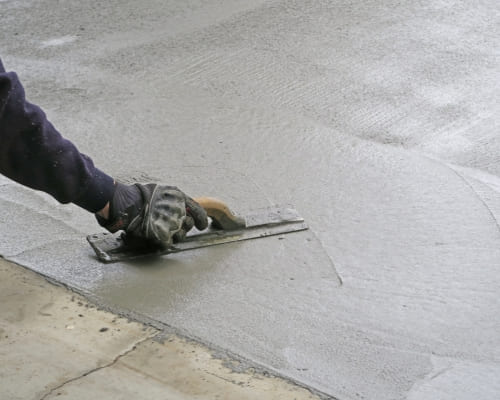
Side paths, garden paths and footpaths built for Werribee's reactive clay. Compacted base, steel mesh, correct falls and joints so a path stays level and drains. Broom, exposed aggregate or coloured finishes. Call 0485 032 128.
Sleeper, core-filled block and poured reinforced retaining walls across Werribee and Wyndham. Built to AS 4678 with the drainage this clay demands. Engineering and permits handled for walls over a metre. Call 0485 032 128.
TESTIMONIALS
What Our Concrete Kerbs & Edging Customers Say About Us
The Process
3 Step Process For Your Concrete Kerbs & Edging Needs

Site visit and fixed quote
It starts with a proper look at the block. The crew measures up, checks access and the lie of the ground, talks through what you want, and flags anything that could affect the pour, such as reactive clay, possible floaters or shallow rock, or drainage on low ground. For structural work that includes whether a soil test or site classification is needed. A fixed, itemised, on-site quote for the agreed scope follows, so there are no surprises later.

Preparation and pour
Good concrete is made before the truck arrives. The excavation goes to the right depth, allowing for any basalt floaters or shallow rock encountered. For slabs, paths and driveways a solid base is built and compacted, formwork is set to correct falls for drainage, and reinforcement is laid to suit the job, while holes for stumps and pier footings are bored to the depth on the engineer's details. On reactive sites the footing design follows those details. The pour is then finished to suit the job, from a broom finish, exposed aggregate or a decorative surface on a slab to a level, plumb top on a stump.

Curing, joints and clean finish
The last stage is where a lot of concrete work is won or lost. The concrete is cured deliberately, slowing surface evaporation to suit the dry, windy conditions common across the west, which helps reduce early cracking. On slabs and driveways, control joints are cut and placed to guide where any movement cracking appears, since joints control cracking rather than prevent it. Sealing is applied where it suits the finish, the site is tidied, and you are walked through curing times and how to look after new concrete in its first few weeks.
Concrete Kerbs & Edging In Werribee
FREQUENTLY ASKED QUESTIONS
Everything you need to know about our Concrete Kerbs & Edging In Werribee
Can curved and circular garden edging be formed in concrete?
Yes, and curves are the main reason a run gets hand-formed rather than machine-laid. Formwork is set to the radius and the profile is worked by hand, which costs more per metre than a straight machine-laid run but gives a true continuous curve with no faceting. This is the clearest advantage poured concrete holds over precast and paver edging, since those can only follow a curve by stepping around it in short straight segments or by using purpose-made radius units. Circular beds, kidney shapes and flowing borders are all achievable in a single continuous pour.
Can a cracked or lifted concrete kerb be repaired, or does it need replacing?
It depends on what the crack is telling you. A single clean crack in an otherwise straight, level run can be cut out and a short section recast, and the new joint is then placed deliberately where the crack was. Where a kerb has lifted, tilted outwards or cracked in a repeating pattern along its length, the problem is underneath it rather than in it, and patching will simply move the failure a metre along. In that case the run is broken out, the line retrimmed and recompacted, and the kerb recast with proper haunching and joints.
Can a mowing strip be added along an existing fence or garden bed?
Yes, and retrofitting a strip along an established line is common work. The constraint is what is already there. A fence line usually has posts set in concrete footings, so the strip is formed around them rather than through them, and the line is set far enough off the palings that a mower wheel is not fouled by them. Along an established garden bed the bed edge is cut back, roots within the trimming depth are dealt with, and the strip is set level with the turf. Existing irrigation and service runs are located before any trenching starts.
How long before a new concrete kerb can be driven over?
Light foot traffic is fine the day after, but a kerb should not be driven over for several days, and reinforced driveway kerbing is better left a week. Concrete keeps gaining strength for around 28 days and reaches most of it in the first week, so early loading is where damage happens. The risk on a kerb is specific: the upstand is the weakest part of the profile and a wheel riding over green concrete chips or shears the top edge, which cannot be repaired invisibly afterwards.
Does old edging get removed first?
Yes, and it is quoted as part of the job rather than left to the customer. Old timber, plastic and steel edging comes out with its pegs, and old concrete edging is broken out and carted away. The reason it cannot simply be built over is the base: whatever sat beneath the old edging has been compressed and disturbed along exactly the line the new kerb needs to bear on, so it has to be trimmed out and recompacted. Removal and spoil cartage are itemised separately on the quote.
Can long edging runs be done on acreage out towards Mount Cottrell?
Yes, and long rural runs are where machine-laid kerbing is at its most economical, since the setup cost is spread across hundreds of metres rather than tens. Acreage work does carry two local conditions worth planning for. The machine needs a clear, trimmed, compacted line to track along, which is more preparation than a short hand-formed run. And around Mount Cottrell the parent basalt sits close to the surface in places, so floaters turning up in the trimming line are allowed for at quoting stage rather than sprung mid-run.
Request A Free Concrete Kerbs & Edging Quote
GET A FREE QUOTE
BUSINESS
SERVICES
OPERATING HOURS
Sun: 6am - 10pm
Mon: 6am - 10pm
Tue: 6am - 10pm
Wed: 6am - 10pm
Thu: 6am - 10pm
Fri: 6am - 10pm
Sat: 6am - 10pm