Concreting Hoppers Crossing, Driveways to Slabs
Hoppers Crossing is one of Wyndham's long-established suburbs, built out through the 1970s and 1980s on the reactive basalt clay that defines Melbourne's west. Peak Concreting Werribee works across the suburb, where a large share of the original driveways, paths and slabs are now decades old and moving on ground that was rarely engineered for it when they were poured.
That age split makes Hoppers Crossing a repair-and-replacement suburb as much as a new-work one. Cracked and lifted driveways, sunken paths and tired slabs come up for replacement, alongside fresh alfresco pads, shed floors and crossovers. The owner reads why the old concrete failed rather than just patching it, prepares the base for the clay, and gives a fixed written quote. Every Hoppers Crossing job is built to the relevant Australian Standards and finished to hold flat through the seasons.
GET A FREE QUOTE
GET A FREE QUOTE
OUR STORY
Concreting Hoppers Crossing: Your Local Concreters
Concreting Hoppers Crossing needs is overwhelmingly replacement work, because the suburb filled out through the 1970s and 1980s and most of its original concrete is now at the end of its life. Driveways poured before footings were designed for reactive-soil movement have cracked, stepped and sunk, paths have lifted at the joints, and surfaces are spalling. Alongside that sits a steady stream of new work on townhouse and infill builds going up on subdivided original blocks.
Local concreters working a suburb of 37,000 residents
Hoppers Crossing is one of Wyndham's largest suburbs and it sits directly alongside Werribee, so a local crew works it constantly rather than visiting it. On replacement work that frequency is worth something specific: the failures here repeat, the same 1970s construction details show up street after street, and a crew that has broken out a hundred of these driveways knows what is under the next one before the breaker starts.
Access and scheduling across an established grid
The streets are an established suburban grid rather than a construction site, which makes access predictable but tight. Mature gardens, established fencing, kerbside parking and street trees all limit where a truck can stand and where a pump line can run. On replacement work there is the additional matter of getting broken concrete out, which needs a position for a bin or a tipper as well as for the delivery truck, and that is settled at quoting stage.
SERVICES WE OFFER IN Hoppers Crossing
Concrete Laid for Brick-Veneer Homes Built From the 1960s
Hoppers Crossing sits squarely on Melbourne's western volcanic plains, where the natural ground is reactive basalt clay that swells after rain and shrinks in the dry. Unlike the newer estates there is little engineered fill here, so the condition is simpler and more consistent: seasonal clay movement acting on concrete that was mostly poured before that movement was designed for. The three sections below cover why the old concrete has failed and what a new slab has to do differently. The absence of fill is genuinely good news here, because it means a correctly built replacement has one variable to manage rather than two.
Why slabs poured in the 1970s are lifting and spalling
Concrete of that era was commonly laid thin, with no steel and no control joints, straight onto whatever was there. It has no capacity to resist seasonal clay movement, so it cracks in random patterns rather than on joint lines, and nothing holds the pieces together once it does. Spalling is the other common failure, where the top few millimetres break away from a curing or finishing shortcut at the original pour, leaving a pitted, dusty surface over sound concrete.
Reactive basalt clay across Melbourne's western plains
The clay here is basalt-derived with high reactivity, which under AS 2870 classifies most of this ground as a moderately to highly reactive site. That classification sets slab thickness, beam depth and the reinforcement schedule on anything structural, and it is why a replacement slab is engineered rather than poured as a flat pad like the one it replaces. Loose basalt boulders known as floaters also run through the clay and turn up in footing excavation.
Drainage on established flat blocks
The ground is flat, so falls are built rather than found, and on established blocks the drainage faults are usually already there and already causing damage. Water held against a slab edge keeps the clay beneath it swollen while ground a metre away dries out, and that difference is what cracked the original concrete. Downpipes and air-conditioning condensate lines discharging beside a slab are the most common culprits and are dealt with as part of the work.
Why choose us in Hoppers Crossing
Why Hoppers Crossing Households Choose Peak Concreting
On replacement work the valuable part is not the pour, it is working out why the first one failed. A new slab laid on the same soft ground, with the same downpipe still discharging beside it, cracks the same way the original did, just later. Every job here starts by establishing the cause, and the recommendation is given plainly, including where a repair or an overlay rather than a replacement is the honest answer. That matters in a suburb where whole streets reach the end of their concrete at once and the easy sale is always the biggest one.
Fully insured, Werribee based, fixed written quotes
Peak Concreting Werribee works next door in Werribee rather than driving in from across the city, carries twenty million dollars in public liability cover, and itemises every quote on site, with the demolition, cartage, base, steel, finish and joint cutting listed separately. On replacement work that itemisation is the point, because breaking out and carting away an old driveway is a real cost that a cheaper-looking quote has frequently simply omitted.
Reading an older slab before quoting it
Twelve years of laying and repairing concrete across Werribee and Hoppers Crossing is mostly experience of what old slabs do next. Three checks settle most of these driveways: a straightedge across the panel joints shows whether anything has lipped or dished, tapping the surface finds delamination because sound concrete rings and debonded concrete sounds hollow, and marking the ends of a crack shows after a season whether it is still opening.
SERVICES WE OFFER IN Hoppers Crossing
Hoppers Crossing Streets Covered, Hoppers Hill to the Highway
The whole of Hoppers Crossing is covered, and the suburb divides into areas that ask for different work. The original 1970s and 1980s streets off Derrimut Road, Heaths Road and Hogans Road are where most replacement sits. The pockets off Old Geelong Road and Morris Road carry more infill and subdivision. Established gardens, mature street trees and tight side access shape how every job is set out and reached, and on replacement work a position for a bin or tipper has to be found as well as one for the delivery truck.
Huntingfield Drive, Baden Drive and Hampstead Drive pockets
The Huntingfield Drive, Baden Drive and Hampstead Drive pockets are original brick-veneer streets where the concrete is all of an age, so a driveway replacement here is frequently one of several on the same street in a season. Mature gardens and established fencing mean plant and concrete have to be brought in carefully, and set-out has to work with landscaping that has been in place for thirty years rather than against it.
Streets off the Princes Highway and toward Werribee
The streets running off the Princes Highway and toward the Werribee border carry the most infill and townhouse development in the suburb, which changes the job. Shared accessways, battle-axe handles and widened crossovers dominate, boundaries are tight enough that set-out is agreed with neighbours in advance, and new concrete frequently has to tie into work a builder has already done, so levels are taken off what is there.
Where Hoppers Crossing meets Werribee, Tarneit and Point Cook
Hoppers Crossing sits between Werribee to the south-west, Tarneit to the north and Point Cook to the east, and the same crew pours across all of them. That is a practical advantage rather than a geographic note, because a small job in Hoppers Crossing can be scheduled alongside work in the neighbouring suburbs, which keeps a single path or a clothesline pad viable when it would otherwise be an uneconomic trip.
Why choose us in Hoppers Crossing
Concrete Driveways Hoppers Crossing: Replacing Ageing Slabs
Driveway replacement is the single biggest job type in Hoppers Crossing, and it is a different exercise from a first pour on a bare block. The old slab has to come out, the ground beneath it has usually contributed to the failure, and whatever caused the first driveway to break needs dealing with or the new one inherits it. Infill and townhouse builds add a second stream of genuinely new driveways on subdivided lots.
Replacing a cracked driveway on an original block
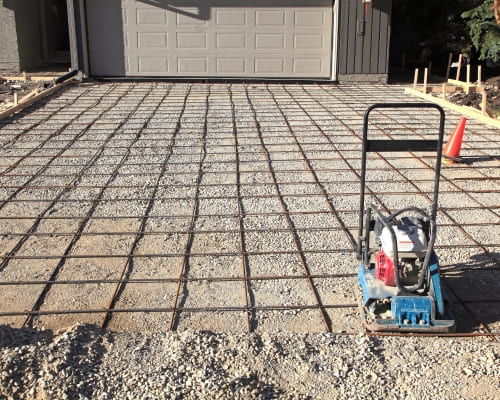
The failed slab is broken out and carted to a recycler, then the base is corrected rather than simply recompacted, because pouring onto the same soft ground or the same drainage fault buys a few years at best. The new driveway gets the thickness, the steel and the control joints the original never had, and falls are reset so water sheds away from the house. Where the slab abuts concrete that is staying, the break line is saw-cut for a clean edge.
New driveways for townhouse and infill builds
Subdivided original blocks throw up driveways the suburb was not laid out for: long shared accessways down a boundary, battle-axe handles serving a rear dwelling, and crossovers widened to take two households. These are set out against shared boundaries agreed with both parties before formwork goes in, and jointed so each dwelling's section can move independently. Drainage needs particular care, since a long narrow accessway collects water with nowhere obvious to send it.
Crossovers and the City of Wyndham permit step
The crossover is the section between the kerb and the property boundary and it is Wyndham City Council infrastructure, so a new one or a widening needs council consent, built to the standard profile and levels and inspected. On infill builds that step comes up almost always, because a second dwelling usually means a wider crossover. It is flagged at quoting stage rather than discovered mid-job, since approval takes time and cannot be obtained afterwards.
How concreting in Hoppers Crossing is quoted per square metre
Concreting is rated per square metre of finished surface, built from the excavation and cartage, the compacted base, the steel, the concrete volume, the labour and the joint cutting. On replacement work two items dominate and both concern the old slab: breaking it out and carting the broken concrete away. A quote that looks notably cheaper has often left one of those out, which is why demolition and cartage are itemised separately.
Exposed aggregate and coloured driveway finishes
Replacing a driveway is the one chance to change the finish, and on established brick-veneer homes two work well. Exposed aggregate leaves stone standing proud for grip and hides marks, and its texture suits a period facade. Coloured concrete runs oxide through the mix, with warmer reds and sandstones sitting comfortably against 1970s and 1980s brickwork where a charcoal can look stark. Both depend on sealing to hold their depth.
SERVICES WE OFFER IN Hoppers Crossing
Small Concreting Jobs and Repairs Around Hoppers Crossing
In a suburb of ageing concrete most small work is remedial. Paths poured decades ago without reinforcement or control joints have lifted and cracked, steps have moved, and the pads around the back of the house have broken up. Not all of it needs replacing, and the cheapest work on this page is often the most useful. Small jobs carry a minimum charge rather than a per-metre rate, so dealing with everything on a property in one visit is the sensible approach.
Crack repair and trip-hazard grinding on older paths
A lipped edge of more than about five millimetres is a genuine trip hazard and it is the most common complaint on Hoppers Crossing paths. Where one panel sits proud of its neighbour the lip grinds back to a feathered taper the same day, with no concrete required, up to a depth of roughly twenty millimetres before reinforcement cover becomes a concern. A crack still opening needs the cause dealt with rather than the crack filled.
Path, step and clothesline pads
The recurring small pours are a side path replaced where the original has failed, a step or two rebuilt at a back door where levels have moved, and a fresh pad under a clothesline, water tank or bin store. Each needs the same base preparation and falls as anything larger. On established blocks each generally has to be hand-barrowed, because no truck reaches down the side of a lived-in house with a mature garden and fencing either side.
Resurfacing a sound Hoppers Crossing driveway instead of replacing it
Not every tired driveway here needs replacing, and resurfacing is far cheaper when the slab qualifies. A slab that is faded, stained and dusty but still flat, draining correctly and not moving is an ideal candidate, and an overlay avoids the demolition, the cartage and the new base entirely. What rules a slab out is movement: cracks still opening, panels lipped against one another, or a surface already debonding will take any coating down with them.
Sealing and resealing driveways and paths in Hoppers Crossing
Sealing is the cheapest thing that extends the life of concrete here, because water entering a crack reaches the reinforcement, and corroding steel expands and forces the crack wider from inside. A sealer keeps water out and stops oil and tyre marks soaking in. The water test says when a reseal is due: if water darkens the surface as it soaks in rather than beading on it, the seal has gone and recoating is overdue.
Why choose us in Hoppers Crossing
Concrete Slabs Hoppers Crossing: Sheds, Garages and Alfresco
Slab work here goes in behind houses that have been lived in for decades, which changes the job more than the slab. Established gardens, fencing, irrigation, service runs and mature trees are all in the way, and side access on an original block is often under a metre and a half. The two sections below cover the two jobs that come up: a shed or garage at the rear, and an alfresco added to a renovation.
Shed and garage slabs behind an original home
A shed slab is set out from the shed's own hold-down points, with the edge thickened where the frame bolts down, and thickness following the use. On these blocks the governing factor is access, so concrete is commonly pumped or barrowed to the rear. Old sheds being replaced bring an extra step, because the original slab usually has to come out and the ground beneath it has been compacted and contaminated by decades of use.
Alfresco and pergola slabs on established yards
An alfresco slab added to an older house meets the existing slab at a level flush enough that there is no trip at the door, while falling away so water never runs back towards the wall. The two are separated by a joint so each can move independently, which matters more on an older house whose footings were never designed for this ground. Tree roots are the common complication, since excavation near an established tree needs care.
concreting Services we offer In Hoppers Crossing
Concrete Driveways
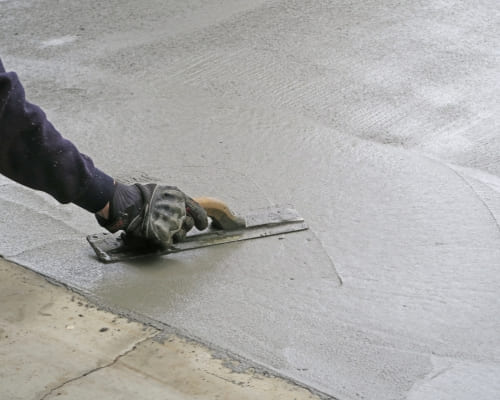
Durable concrete driveways built for Werribee's reactive basalt clay - compacted base, correct thickness, steel mesh and control joints, in plain, coloured or exposed aggregate. New crossovers and replacements across the Wyndham corridor.
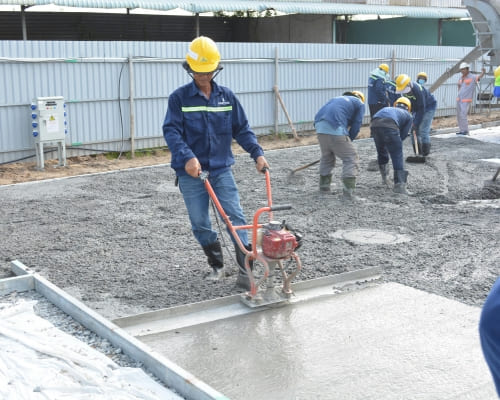
Concrete Slabs & Footings
House slabs, shed floors and strip and pad footings poured to AS 2870 for Werribee's reactive basalt clay. Site classification first, engineered design to follow, fixed on-site quotes across the Wyndham corridor.

Exposed Aggregate Concrete
Exposed aggregate concrete for Werribee driveways, paths, alfresco and pool surrounds - washed to reveal the stone for grip and low upkeep. Compacted base, reinforced, sealed, fixed on-site quotes.
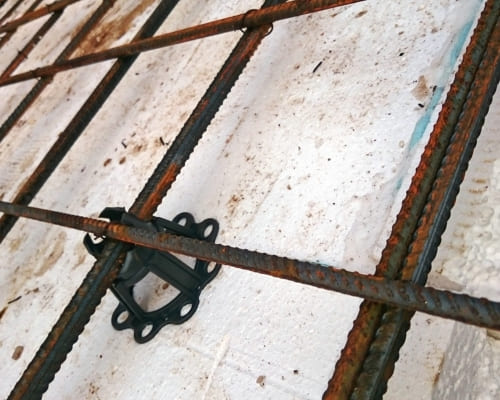
Concrete Paths & Footpaths
Side paths, garden paths and footpaths built for Werribee's reactive clay. Compacted base, steel mesh, correct falls and joints so a path stays level and drains. Broom, exposed aggregate or coloured finishes. Call 0468 042 026.
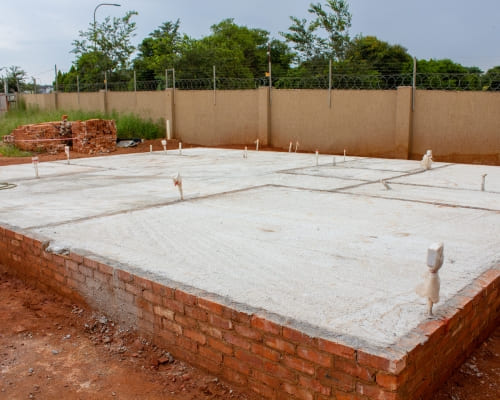
Concrete Kerbs & Edging
Garden edging, mowing strips, driveway kerbs and commercial profiles across Werribee and Wyndham. Machine-laid for long runs, hand-formed around curves, haunched and jointed for reactive clay. Call 0468 042 026.
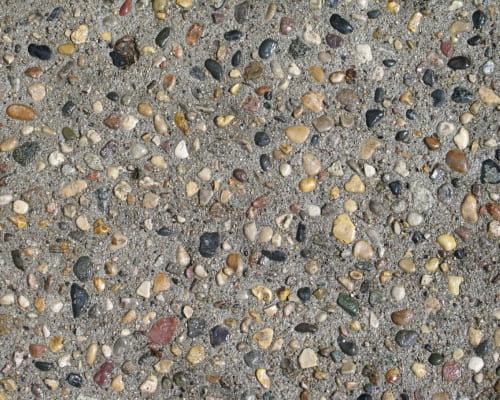
Concrete Repairs
Crack repair, trip-hazard grinding, spalling floors and sunken slabs across Werribee and Wyndham. Every repair starts with diagnosing the cause, and a straight answer where replacement is the cheaper option. Call 0468 042 026.
Concrete Retaining Walls
Sleeper, core-filled block and poured reinforced retaining walls across Werribee and Wyndham. Built to AS 4678 with the drainage this clay demands. Engineering and permits handled for walls over a metre. Call 0468 042 026.
Polished Concrete
Polished concrete floors across Werribee and Wyndham, from salt and pepper to full stone exposure. Mechanically polished with no coating to peel, or grind and seal where the budget suits. Call 0468 042 026.
Concrete Sealing
Sealing and resealing driveways, exposed aggregate and decorative concrete across Werribee and Wyndham. Preparation quoted as its own line item, because that is what decides whether a seal lasts. Call 0468 042 026.
Concrete Resurfacing
Spray-on, stencil and bonded overlays across Werribee and Wyndham, with no demolition and no new base. Assessed first, because an overlay on a moving slab is money spent twice. Call 0468 042 026.
Coloured Concrete
Coloured concrete driveways, paths and alfresco areas across Werribee and Wyndham, with oxide run through the mix rather than painted on. Test panel poured before the shade is committed. Call 0468 042 026.
Honed Concrete
Honed concrete driveways, alfresco areas and pool surrounds across Werribee and Wyndham. Ground to a specified grit and sealed at low sheen, so it stays smooth underfoot and grippy wet. Call 0468 042 026.
Stamped Concrete
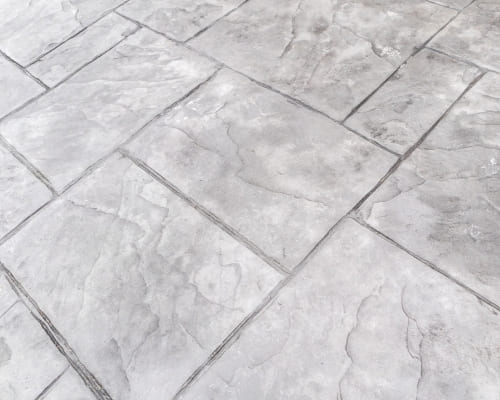
Stamped concrete driveways, paths, alfresco areas and pool surrounds across Werribee and Wyndham, in slate, flagstone, timber-look and cobble patterns. One continuous slab, no joints to weed. Call 0468 042 026.
concreting In Hoppers Crossing
FREQUENTLY ASKED QUESTIONS
Everything you need to know about our concreting In Hoppers Crossing
Why does concrete crack so much in Hoppers Crossing?
Because Hoppers Crossing sits on reactive basalt clay that swells when it takes up water and shrinks as it dries, and over the seasons that movement cracks and lifts concrete not built to cope with it. Much of the suburb's older concrete was poured before footings were designed for that movement, which is why so many driveways and paths have failed. Peak Concreting Werribee deals with it by preparing a proper base, reinforcing correctly, cutting control joints and grading drainage to keep moisture stable.
Can you replace my cracked driveway in Hoppers Crossing?
Yes, replacing cracked and lifted driveways is one of the most common jobs in Hoppers Crossing given how much 1970s and 1980s housing there is. The crew removes the old concrete, re-prepares and compacts the base, sets the right thickness and reinforcement, and cuts control joints to manage future movement. The owner first works out why the original failed so the replacement does not repeat it, and gives a fixed written quote covering the whole job.
Is it worth repairing old concrete or replacing it?
It depends on the slab. Where concrete is structurally sound, repairs like crack filling, grinding a trip hazard or resurfacing can be good value. Where the slab has moved on the clay, is thin, or was poured on a poor base, replacement is usually the better long-term value. The owner gives a straight assessment on the block rather than defaulting to the bigger job, and a fixed written quote either way. Call 0468 042 026.
Do you pour alfresco slabs and shed floors in Hoppers Crossing?
Yes. Alongside replacement work the crew pours alfresco pads, shed and garage floors, extension slabs, paths and crossovers throughout Hoppers Crossing. Anything structural is built to AS 2870 in line with the block's site classification, and outdoor slabs get proper base preparation, correct thickness, mesh and control joints so they stay flat on the reactive ground. Describe what you are planning and the price comes back fixed.
How much does concreting cost in Hoppers Crossing?
Concreting in Hoppers Crossing is priced by the square metre and by the finish, so a plain driveway, an exposed-aggregate one and a decorative slab all sit at different rates. Removing an old cracked driveway before repouring adds to a replacement, and access, thickness, reinforcement and drainage all shift the figure. Peak Concreting Werribee gives a fixed, itemised written quote after seeing the block, with figures ex GST and confirmed on site.
How long before I can use new concrete in Hoppers Crossing?
As a general guide, a new slab can be walked on after a day or two, vehicles should stay off a new driveway for about a week, and full strength develops over roughly a month. The concrete is cured properly, which matters on Melbourne's dry, windy west where a summer pour can lose surface moisture quickly. The owner gives clear timing for the specific slab and the weather on pour day, so you know exactly when it is safe to use.
TESTIMONIALS
What Hoppers Crossing Homeowners Say About Us
Request A Free Quote
GET A FREE QUOTE
BUSINESS
SERVICES
OPERATING HOURS
Sun: 6am - 10pm
Mon: 6am - 10pm
Tue: 6am - 10pm
Wed: 6am - 10pm
Thu: 6am - 10pm
Fri: 6am - 10pm
Sat: 6am - 10pm