Concreting Werribee South, Coastal and Farm Slabs
Werribee South is the low-lying market-garden and coastal district on the Werribee River delta in the City of Wyndham, laid out for irrigated cropping from the early 1900s. Peak Concreting Werribee works across the area, where the defining challenge is not just reactive clay but naturally sodic, saline soils and a shallow salty water table, all of which change how concrete has to be built to last.
That ground makes durability the priority here. Driveways, farm and shed slabs, crossovers and house slabs all sit over soils where salt and sulphate attack ordinary concrete and steel, so the mix, the cover and the drainage matter as much as the thickness. The owner reads the block, recommends the soil and water testing this district warrants, and builds with the right durable mix and reinforcement cover. Every Werribee South pour is engineered for salt, moisture and the low delta ground it sits on.
GET A FREE QUOTE
GET A FREE QUOTE
OUR STORY
Concreting Werribee South: Your Local Concreters
Concreting Werribee South needs is unlike anywhere else in this service area, because the suburb is market gardens, semi-rural blocks and a foreshore strip rather than estates. The jobs are driveways on larger holdings, packing shed and cool room slabs, machinery pads and tank bases, alongside ordinary household work on established homes. Two local conditions govern all of it: salt air off Port Phillip Bay, and low-lying ground near the river.
Local concreters minutes from the Werribee base
Werribee South is the closest area in this service list to the Werribee base, which is a genuine practical advantage rather than a selling line. A crew can be on site to look at a job before quoting it, come back when a slab needs checking, and return later if something needs attention, none of which is economic from across the city. On growing properties, where work has to fit around a season, that responsiveness matters more than it does on a suburban block.
Access for concrete trucks on market garden tracks
A loaded agitator is heavy, and many properties here are reached by an unsealed track between growing beds or along an irrigation line, which is the first thing walked at quoting stage. A soft or wet track, a narrow gateway, an irrigation main crossing the route or a culvert of unknown capacity each change the method. Where a truck cannot safely reach the pour, concrete is pumped from a hard standing position instead.
SERVICES WE OFFER IN Werribee South
Concrete Poured for Salt Air and Market Garden Ground
Three ground conditions govern concreting here and none of them applies inland. Salt arrives both as air off Port Phillip Bay and as salts dissolved in low-lying soil. The land near the river is low and flat with a water table close to the surface. And market garden soils have been worked, amended and in places built up into growing beds for generations, so what is under a slab is not what the geology says.
Why salt air closer to Port Phillip Bay matters
Salt attacks concrete from the inside rather than the surface. Chlorides carried in air or groundwater penetrate the concrete and reach the reinforcement, and once steel begins to corrode it expands, which cracks and spalls the concrete off from within. The defences are a lower-permeability mix with adequate cover over the steel, and a penetrating sealer that works inside the pores where salt actually travels, rather than a film sitting on top.
Low-lying ground and drainage near the river
Close to the river the ground is low, flat and often wet, and a water table near the surface changes two things. Excavations can fill while open, which affects how a footing is poured and sometimes requires dewatering. And finding a legal discharge point genuinely lower than a new slab can be the hardest part of the design. Where water cannot be sent away, it will sit, and standing water on low ground keeps salts in solution and moving.
Market garden soils and made-up growing beds
Generations of cultivation leave soil that is not natural profile: amended, deep-ripped, in places built up into beds and elsewhere stripped. It is organic-rich, which is the problem, because organic material keeps consolidating under load for years and will never stop settling under a slab. That material is dug out entirely rather than compacted in place, and footings reach through it to competent ground, which is often deeper than it looks.
Why choose us in Werribee South
Why Werribee South Households Choose Peak Concreting
The mistake that costs most here is treating a Werribee South slab like one eight kilometres inland. Salt, a high water table and generations of worked soil each change the design, and none of them shows up in a quote given from a photograph. Every job is measured on site with the ground, the drainage and the access assessed, and the mix and sealer specified for the conditions rather than taken from the standard order.
Fully insured, Werribee based, fixed written quotes
Peak Concreting Werribee is based minutes away, carries twenty million dollars in public liability cover, and quotes every job fixed and itemised on site, with the excavation, base, steel, finish and joint cutting listed separately, plus any lower-permeability mix or additional drainage shown as its own line rather than buried in a rate. Anything the ground forces to change is agreed in writing before it is built.
Working around a growing season and a running property
A market garden is a business with a calendar, so the concreting fits around it rather than the reverse. A packing shed cannot be out of service during harvest, machinery access cannot be cut off, and irrigation lines cannot be crossed by a pump line at the wrong moment. The sequence, the access route and the honest cure times are agreed with the grower before the pour is booked, and work is scheduled into the quieter part of the season where it can be.
SERVICES WE OFFER IN Werribee South
Werribee South Covered, the Market Gardens to the Foreshore
The whole of Werribee South is covered, and it divides into three areas that ask for different things. The market gardens along the Duncans Road end are production properties with their own access and ground conditions. The foreshore strip toward the beach is residential and the most exposed to salt. And the land toward Werribee Park and the zoo is a mix of both. Ground, access and exposure change between them, and the lowest blocks near the river add a drainage constraint that is settled before anything is set out.
Blocks along the market gardens and Duncans Road end
The growing properties along the Duncans Road end are where the production slabs sit: packing sheds, cool rooms, loading pads, machinery and tank bases. Access is the first assessment on every one, because the approach is often an unsealed track between beds or along an irrigation line. Worked and built-up soils are deepest here, so what has to be dug out before a slab can bear properly is greater than it appears on the surface.
Streets toward the foreshore, the zoo and Werribee Park
Toward the foreshore the properties are residential and the most exposed to salt air in this service area, so the mix, the cover over the steel and a penetrating rather than topical sealer all matter more here than anywhere. Lighter finishes also suit this end, since a dark slab in full coastal sun gets hot underfoot. Nearer Werribee Park and the zoo the blocks are larger and the work is a mix of household and semi-rural.
Sealing concrete against salt in Werribee South
Sealing is not cosmetic here, it is corrosion protection. A penetrating silane or siloxane sealer reacts inside the pores to repel water and dissolved chlorides, which is where salt actually travels, and it leaves no film to peel in coastal sun. A topical film gives better stain resistance and more colour depth but degrades faster this close to the bay. Resealing on schedule matters more here than inland, because the surface is the barrier keeping salt away from the steel.
Why choose us in Werribee South
Concrete Driveways Werribee South: Coastal and Rural Blocks
Driveways here run longer than suburban ones and carry heavier vehicles, because a growing property takes delivery trucks, tractors and loaded trailers rather than just cars. The ground adds two problems a suburban driveway never faces: salts in low-lying soil attacking reinforcement, and a water table close enough to the surface that drainage cannot be treated as an afterthought. The sections below cover the length, the council step, the pricing and the finishes.
Driveways on larger semi-rural blocks
A long driveway is a sequence of panels rather than a slab, so joint spacing and a true set-out carry the result over distance. Thickness follows the heaviest vehicle that will realistically use it, which on a growing property means a delivery truck or a loaded trailer. Falls are built along the full length as well as across it, and on ground this low the discharge point has to be genuinely lower than the driveway, which is not always easy to find.
Crossovers and the council permit step
The crossover is the section between the kerb or road edge and the property boundary and it is council infrastructure, so a new one or a widening needs consent, built to the standard profile and levels and inspected. On a rural frontage the entrance usually also needs a culvert sized for the roadside drain, and works within the road reserve go to the road authority. Both are identified at quoting stage, since neither can be obtained afterwards.
How concreting in Werribee South is quoted per square metre
Concreting is rated per square metre of finished surface, built from the excavation and cartage, the compacted base, the steel, the concrete volume at the designed thickness, the labour and the joint cutting. Two local items commonly sit on top: a lower-permeability mix where salt is a factor, and additional drainage work on low ground. The larger areas typical here help, since the fixed costs spread across more square metres.
Exposed aggregate and coloured driveway finishes
On established homes here both finishes work, with a coastal caveat. Exposed aggregate leaves stone standing proud for grip and hides marks well. Coloured concrete runs oxide through the mix, and lighter sandstone tones stay cooler underfoot near the water than charcoals do. Both depend on sealing, and closer to the bay a penetrating sealer outlasts a topical film, which salt air degrades faster.
SERVICES WE OFFER IN Werribee South
Small Concreting Jobs and Repairs Around Werribee South
Much of the housing here has been in place for decades, so the small work is mostly remedial: paths lifted at the joints, steps that have moved, and pads around the back of the house that have broken up. On growing properties it is trough pads, pump pads and short runs of path to a shed. Small jobs carry a minimum charge rather than a per-metre rate, so dealing with everything on a property in one visit is the sensible approach.
Crack repair and trip-hazard grinding on older slabs
A lipped edge over about five millimetres is a genuine trip hazard and grinds back to a feathered taper the same day with no concrete needed. On this ground there is a particular reason to seal cracks rather than leave them: water reaching reinforcement starts corrosion, and where salts are present in the soil that corrosion runs faster and forces the crack wider from inside. A crack still opening needs the cause addressed rather than the crack filled.
Path, step and clothesline pads
The recurring small pours are a side path replaced where the original has failed, a step or two rebuilt at a back door where levels have moved, and a fresh pad under a clothesline or water tank. Each needs the same base preparation and falls as anything larger. On established blocks each generally has to be hand-barrowed, because no truck reaches down the side of a house with a mature garden either side.
Shed, garage and alfresco slabs on established homes
A shed slab is set out from the shed's own hold-down points with the edge thickened where the frame bolts down, and thickness follows the use. An alfresco slab meets the existing house slab flush enough that there is no trip at the door while falling away from the wall, separated by a joint so each can move independently. On established blocks access and mature tree roots both govern how the work is done.
Why choose us in Werribee South
Concrete Slabs Werribee South: Sheds, Packing and Machinery
Slab work on a growing property is production infrastructure rather than storage, and that changes what the concrete has to do. A packing shed floor is a food-handling surface that gets washed daily. A cool room slab has to deal with condensation and insulation. Machinery pads carry tractors and implements. Tank bases take a permanent concentrated load. The three sections below cover each, and all begin with how the surface will be used rather than its area.
Packing shed, cool room and loading pad slabs
A packing shed floor is washed down constantly, so falls run to a drain rather than to the doorway and the surface is dense enough not to dust but textured enough to stay safe wet. A cool room slab adds insulation beneath and condensation above, so the vapour barrier and the junction detail at the walls matter more than the thickness. Loading pads take truck wheels on full lock at the edge, which is where they fail first if the edge is not thickened.
Machinery, implement and water tank bases
A machinery slab is designed for the heaviest item that will stand or drive on it, which on a growing property means a tractor or a loaded implement rather than a car, with the edge thickened where a shed frame bolts down. A full water tank is heavier again and the load is concentrated and permanent, so the base is level, sized to the full footprint with a margin, reinforced for the standing load, and founded on compacted ground rather than worked soil.
Why wash-down changes the mix and the cure
Anything washed daily needs a dense, low-permeability surface, and the part most often skimped is the cure rather than the mix. A slab that loses surface moisture too fast sets with a weaker, more porous skin, which is exactly the layer that has to keep wash water, detergents and produce residue out of the concrete beneath. Falls to a drain and a detailed junction at the walls do the rest, since water that gets under a wall is never seen until it has done damage.
concreting Services we offer In Werribee South
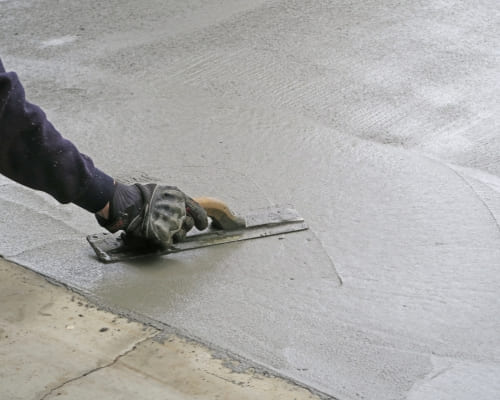
Concrete Driveways
Durable concrete driveways built for Werribee's reactive basalt clay - compacted base, correct thickness, steel mesh and control joints, in plain, coloured or exposed aggregate. New crossovers and replacements across the Wyndham corridor.
Concrete Slabs & Footings
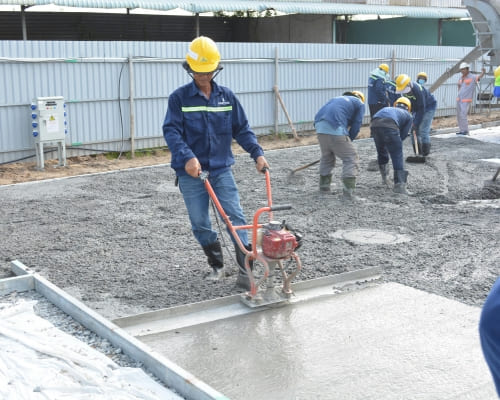
House slabs, shed floors and strip and pad footings poured to AS 2870 for Werribee's reactive basalt clay. Site classification first, engineered design to follow, fixed on-site quotes across the Wyndham corridor.

Exposed Aggregate Concrete
Exposed aggregate concrete for Werribee driveways, paths, alfresco and pool surrounds - washed to reveal the stone for grip and low upkeep. Compacted base, reinforced, sealed, fixed on-site quotes.
Concrete Paths & Footpaths
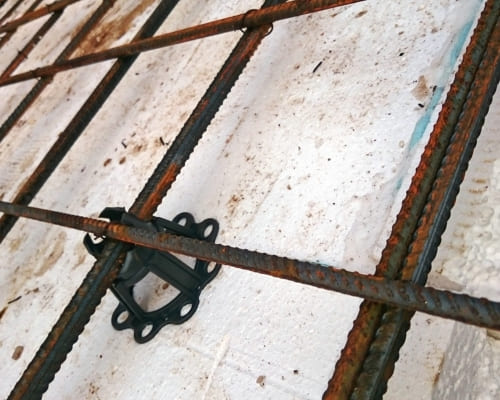
Side paths, garden paths and footpaths built for Werribee's reactive clay. Compacted base, steel mesh, correct falls and joints so a path stays level and drains. Broom, exposed aggregate or coloured finishes. Call 0468 042 026.
Concrete Kerbs & Edging
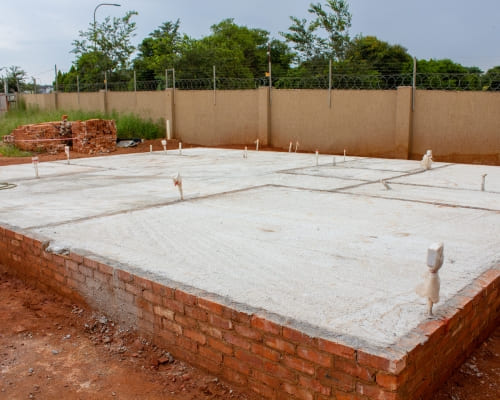
Garden edging, mowing strips, driveway kerbs and commercial profiles across Werribee and Wyndham. Machine-laid for long runs, hand-formed around curves, haunched and jointed for reactive clay. Call 0468 042 026.
Concrete Repairs
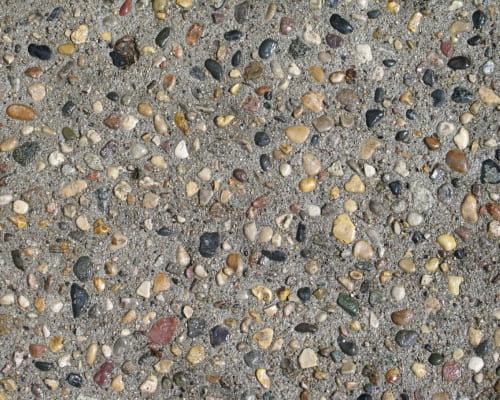
Crack repair, trip-hazard grinding, spalling floors and sunken slabs across Werribee and Wyndham. Every repair starts with diagnosing the cause, and a straight answer where replacement is the cheaper option. Call 0468 042 026.
Concrete Retaining Walls
Sleeper, core-filled block and poured reinforced retaining walls across Werribee and Wyndham. Built to AS 4678 with the drainage this clay demands. Engineering and permits handled for walls over a metre. Call 0468 042 026.
Polished Concrete
Polished concrete floors across Werribee and Wyndham, from salt and pepper to full stone exposure. Mechanically polished with no coating to peel, or grind and seal where the budget suits. Call 0468 042 026.
Concrete Sealing
Sealing and resealing driveways, exposed aggregate and decorative concrete across Werribee and Wyndham. Preparation quoted as its own line item, because that is what decides whether a seal lasts. Call 0468 042 026.
Concrete Resurfacing
Spray-on, stencil and bonded overlays across Werribee and Wyndham, with no demolition and no new base. Assessed first, because an overlay on a moving slab is money spent twice. Call 0468 042 026.
Coloured Concrete
Coloured concrete driveways, paths and alfresco areas across Werribee and Wyndham, with oxide run through the mix rather than painted on. Test panel poured before the shade is committed. Call 0468 042 026.
Honed Concrete
Honed concrete driveways, alfresco areas and pool surrounds across Werribee and Wyndham. Ground to a specified grit and sealed at low sheen, so it stays smooth underfoot and grippy wet. Call 0468 042 026.
Stamped Concrete
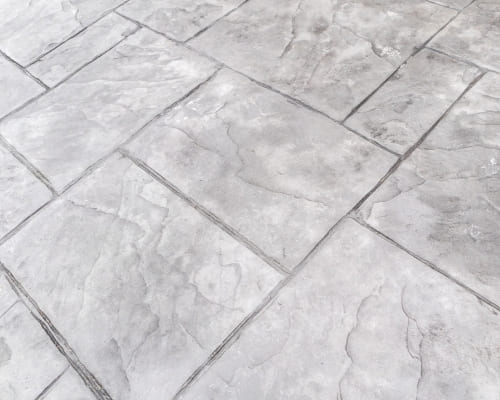
Stamped concrete driveways, paths, alfresco areas and pool surrounds across Werribee and Wyndham, in slate, flagstone, timber-look and cobble patterns. One continuous slab, no joints to weed. Call 0468 042 026.
concreting In Werribee South
FREQUENTLY ASKED QUESTIONS
Everything you need to know about our concreting In Werribee South
Why does concrete need special mixes in Werribee South?
Because Werribee South sits on naturally sodic, saline delta soils with a shallow salty water table, and salts and sulphates in the ground attack ordinary concrete and corrode steel that lacks proper cover. Peak Concreting Werribee builds against that with a dense, lower-permeability mix, often using sulphate-resisting cement, and increased cover over the reinforcement, so the concrete resists chemical attack and lasts on ground that would spall a standard slab within a few years.
Should I get the soil and water tested first?
In Werribee South it is often worth it. Because the salinity and the shallow water table vary across the district, testing tells the crew the exposure so the mix, the cover and the drainage are matched to the actual ground rather than guessed. The owner advises where testing is worthwhile as part of the quote, so the slab is designed for the conditions on your block. Call 0468 042 026 to talk it through.
Do you pour packing sheds, farm and machinery slabs here?
Yes. Packing-shed and cool-store slabs, machinery and wash-down pads, and farm and shed floors are common Werribee South jobs, and each is poured to the thickness, reinforcement and durable mix the load and the salt exposure call for, with graded falls to a drainage point. On this ground the mix and cover matter as much as the thickness. The owner sizes and specifies the slab to the job after seeing the block.
Can you build a durable driveway on salty ground?
Yes. A Werribee South driveway is built with a durable, lower-permeability mix and proper cover over the steel, on a compacted base graded so water and salt are led away rather than sitting against the slab. It is still at least 100 mm of concrete over mesh, stepped up where loads are heavy, but the mix, the cover and the drainage are what make it last on saline ground. Call 0468 042 026 for a fixed written quote.
How much does concreting cost in Werribee South?
Concreting here is priced by the area, the finish and the durability the ground calls for, so a durable farm slab, a driveway and a house path all sit at different rates. The mix, the cover, access, thickness, reinforcement, drainage and any testing all shift the figure. Peak Concreting Werribee gives a fixed, itemised written quote after seeing the block rather than a phone guess, with figures ex GST and confirmed on site.
How long before I can use new concrete in Werribee South?
As a general guide, a new slab can be walked on after a day or two, vehicles should stay off a new driveway for about a week, and full strength develops over roughly a month. On salty ground the crew cures the concrete carefully to build the dense, low-permeability surface that resists salt, which matters on the exposed, windy delta. The owner gives clear timing for the specific job and the weather on pour day.
TESTIMONIALS
What Werribee South Homeowners Say About Us
Request A Free Quote
GET A FREE QUOTE
BUSINESS
SERVICES
OPERATING HOURS
Sun: 6am - 10pm
Mon: 6am - 10pm
Tue: 6am - 10pm
Wed: 6am - 10pm
Thu: 6am - 10pm
Fri: 6am - 10pm
Sat: 6am - 10pm