Concreting Williams Landing, Driveways to Shed Slabs
Williams Landing is one of Wyndham's newest suburbs, a station-centred community that grew from grazing paddocks after the railway opened in 2013. Peak Concreting Werribee pours across the estate, where nearly every home dates from the 2010s and sits on reactive volcanic-plains clay over engineered fill, the ground that decides how a slab has to be built.
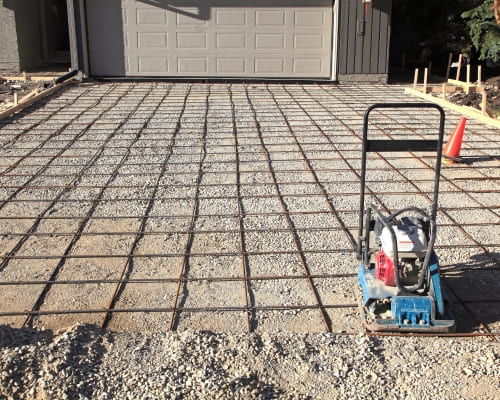
Recent builds here need driveways, house slabs, alfresco pads and paths poured to cope with that ground, not just finished to look good. The crew prepares each base to the block's soil report, sets the reinforcement and cuts the joints that keep a slab sound as the clay works through the seasons. From an exposed-aggregate driveway near the Town Centre to a shed slab off Point Cook Road, every Williams Landing job is quoted in writing and built to last.
GET A FREE QUOTE
GET A FREE QUOTE
OUR STORY
Concreting Williams Landing: Local Concreters, Werribee Based
Concreting Williams Landing needs is shaped almost entirely by when the suburb was built. The railway station opened in 2013 on what had been open grazing paddocks a generation earlier, and the estates filled quickly behind it, so nearly every home is a post-2010 build on a compact lot. That means new driveways, shed and alfresco slabs, side paths and crossovers rather than the replacement work older suburbs need, and it means tight side access on most blocks and engineered fill under a good many of them.
Choosing a local concreter over a city-wide operator
Williams Landing is a short run from Werribee, which matters more than it sounds. A local crew can get to a site to look at it before quoting, come back when a slab needs checking, and return if something needs attention later, none of which is economic for an operator driving across the city for one job. The other difference is ground knowledge, since a concreter working this corridor daily already knows how Wyndham fill and reactive clay behave.
Access and booking around builders on a live estate
Parts of Williams Landing are still being built out, and that changes the practicalities rather than the concreting. Streets carry construction traffic, verges and nature strips are often damaged or unmade, and a concrete truck needs a clear standing position that a half-finished street does not always offer. Booking around the builder's own trades on a block, and confirming access and a pump position in advance, is what keeps a pour on the day it was scheduled.
SERVICES WE OFFER IN Williams Landing
Concrete Poured for Engineered Fill on Estates Built Since 2008
Two ground conditions sit under Williams Landing and both have to be designed for. The natural ground is reactive basalt clay, which swells in the wet and shrinks in the dry every year. Over large parts of the suburb that clay is covered by engineered fill brought in to level blocks for the estate releases. A slab here therefore has to cope with seasonal movement from below and with fill that may still be consolidating, which is why every job works off the block's own soil report rather than a suburb-wide assumption.
Why engineered fill on a 2008-onward estate still settles
Engineered fill is placed and compacted to a specification, which makes it buildable, not inert. It continues to consolidate under its own weight and under anything built on it for years afterwards, and it consolidates more where it is deeper. A block cut on one side and filled on the other therefore has two different settlement rates across it, and the straight crack that appears along that boundary is the most common early failure on estate concrete here.
Reactive basalt clay under Melbourne's western plains
Beneath the fill, the western volcanic plains are basalt-derived clay with high reactivity, which under AS 2870 classifies most lots here as reactive sites. That classification is what sets slab thickness, beam depth and the reinforcement schedule, and it is the reason a slab on this ground is engineered rather than simply poured flat. Loose basalt boulders known as floaters also run through the clay and turn up in footing excavation.
Drainage on flat blocks where falls have to be built
Williams Landing is flat, so falls are built rather than found, and that is the single most important detail on reactive ground. Water held against a slab edge keeps the clay beneath it swollen while the ground a metre away dries out, and that difference is what cracks slabs and paths. Every surface is graded to shed water away from the house and off the slab edge, and downpipe and air-conditioning condensate discharge points are checked, since both commonly run straight onto new concrete.
Why choose us in Williams Landing
Why Williams Landing Households Choose Peak Concreting
On an estate where a great many driveways went in quickly during the building boom, the difference between one that stays flat and one that cracks in three years was decided underneath it. That is the whole argument for care here. Every job is built to the block's soil report, with the topsoil stripped rather than bridged, the base compacted in layers, the reinforcement set to the classification, and the falls built deliberately on flat ground. Quotes are fixed and itemised before any concrete is ordered.
Fully insured, Werribee based, fixed written quotes
Peak Concreting Werribee is based minutes away rather than driving in from across the city, carries twenty million dollars in public liability cover, and quotes every job fixed and itemised on site, with the excavation, the base, the steel, the finish and the joint cutting listed separately. Anything the ground forces to change, and on these plains footing excavation can meet floaters or shallow rock, is agreed in writing before it is built rather than added afterwards.
What the block’s soil report actually changes
Most Williams Landing owners have a soil report in their build documents and have never opened it. It is the document that decides the concreting: the site classification sets slab thickness, beam depth and the reinforcement schedule, and it records the depth of any fill and where the cut-to-fill line crosses the lot. That line is where the first crack appears if a slab is not jointed to allow for it, which is why the report is read before a quote rather than after a failure.
SERVICES WE OFFER IN Williams Landing
Williams Landing Pockets Covered, Wyndham Waters to Addison Walk
The whole of Williams Landing is covered, and the suburb divides into three working areas that each present something different. The older releases around the station and Town Centre are built out and landscaped. The newer streets spreading toward Point Cook Road and Palmers Road are still filling in. And the parkland edges carry the deepest fill. Compact blocks, shared and battle-axe driveways and new landscaping shape how each job is set out and reached.
Wyndham Waters and the Sayers Road end
The estate roads off Sayers Road and through the Wyndham Waters pocket are largely established, which means landscaping, fencing and irrigation are already in and the job has to work around them rather than through them. Driveways here are commonly widenings and additions rather than first pours, so matching levels and joints into existing concrete is the main technical demand, along with getting plant and concrete in without churning a finished front yard.
Addison Walk, Overton Road and the station precinct
Around Addison Walk, Overton Road and the station precinct the lots are at their most compact, with a high proportion of double-storey townhouses, shared driveways and battle-axe access. The concreting consequence is almost always access: side runs of a metre or less, no truck position at the rear, and neighbouring properties close enough that a pump line or barrow run has to be planned rather than improvised. Set-out against shared boundaries is agreed before formwork goes in.
Streets around Delaney Boulevard Park and the parkland
The streets backing onto the parkland and Delaney Boulevard Park sit on some of the deepest engineered fill in the suburb, because the levels there were made up to meet the park and the drainage reserve. That matters for anything structural: footings reach through fill to competent ground, slabs are jointed to allow for differential settlement, and drainage is checked carefully, since these are the lowest and flattest blocks in Williams Landing.
Why choose us in Williams Landing
Concrete Driveways Williams Landing: New-Estate Blocks and Crossovers
Driveways are the bulk of the concreting in Williams Landing, because most blocks were handed over with a crossover and nothing else. The work divides into first pours on a new block, widening a single driveway once a second vehicle arrives, and the crossover itself, which belongs to the council rather than the owner. Compact lots mean most driveways here are short, so set-out against the garage threshold and the crossover matters more than the area involved.
New driveways and second-vehicle widening
A first driveway on a handed-over block is poured once the builder is off site and the fill has had a season to settle, set out to the approved crossover with levels taken off the garage threshold so water runs away from the house. Widening comes later, and it is fussier: the new section ties into the existing slab at matched level with a joint where they meet so the two can move independently, and the crossover usually has to be widened with council approval as well.
Crossovers and the City of Wyndham permit step
The crossover is the section between the kerb and the property boundary, and it is Wyndham City Council infrastructure. Work on it, whether a new one or a widening, needs council consent, built to the council's standard profile and levels, with an inspection. That step is flagged at quoting stage rather than discovered mid-job, because the approval takes time and a driveway poured up to an unapproved crossover leaves the owner holding the problem.
How concreting in Williams Landing is quoted per square metre
Concreting is rated per square metre of finished surface, and the rate is assembled from the excavation and cartage, the depth of compacted crushed rock, the steel, the concrete volume at the designed thickness, the labour, and the joint cutting. On the compact lots here the area is small and the fixed costs are not, so short driveways carry a higher rate per metre than long ones. Every job is measured on site and quoted fixed and itemised.
Exposed aggregate and coloured driveway finishes
Modern rendered and brick-veneer facades suit a finish other than plain grey, and two carry most of the work here. Exposed aggregate washes the surface paste back to leave stone standing proud, which gives grip and hides marks well. Coloured concrete runs oxide through the mix, with charcoals and mid greys reading well against the dark roofs common through these estates and hiding tyre marks better than pale tones. Both finishes depend on sealing to hold their colour and depth, and both need resealing on a cycle rather than once.
SERVICES WE OFFER IN Williams Landing
Not every job on an estate block is a driveway. A great deal of the work here is small: the pads and paths a builder never included, and the early repairs that younger concrete starts to need once the fill beneath it has finished moving. Small jobs carry a minimum charge rather than a per-metre rate, since getting a crew and a mix to site costs the same either way, so it is usually worth dealing with everything on a property in one visit.
Path, step and clothesline pads
The items left off a new build are consistent: a side path down the boundary, a pad under the clothesline, a step or two at a back door where the finished level left a drop, and a slab for a bin store. Each is small but each needs the same base preparation and falls as anything larger, and on compact lots they usually have to be hand-barrowed because no truck reaches the side of a built house.
Crack repair and trip-hazard grinding on younger slabs
Concrete in Williams Landing is young, so the failures are early ones rather than age. A path or driveway poured onto fill that was still settling can crack along the line where cut ground meets fill, or step where one panel has dropped. A lipped edge over about five millimetres is a genuine trip hazard and grinds back to a feathered taper the same day. A crack that is still opening needs the cause dealt with rather than the crack filled.
Why choose us in Williams Landing
Concrete Slabs Williams Landing: Sheds, Garages and Alfresco
Slab work in Williams Landing is mostly additions to a finished house: a shed at the back, a slab for an alfresco or pergola the builder left off, and occasionally a garage. The constraint is almost always the lot rather than the slab, because compact blocks leave little room between the house and the boundary, and anything poured out the back has to get there through a side access of a metre or so. The two sections below cover both situations.
Shed and garage slabs for narrow new-estate lots
A shed slab is set out to the shed's own hold-down points, so the dimensions come off the shed drawings rather than from a rounded figure, and the edge is thickened where the frame bolts down. Thickness follows the use, with a garage or workshop floor carrying more than a garden shed. The practical limit on these lots is access: where a truck cannot reach the rear, concrete is pumped or barrowed, and that is priced before the job rather than discovered on the day.
Alfresco and pergola slabs matched to the house pad
An alfresco slab added after the build has to meet the existing house slab at the right level, flush enough that there is no trip at the door but falling away so water never runs back towards the wall. The two are separated by a joint so they can move independently, since tying a new slab rigidly to a house pad on reactive clay drags one or the other apart. Finishes here are usually honed or coloured to suit the room it opens off.
concreting Services we offer In Williams Landing
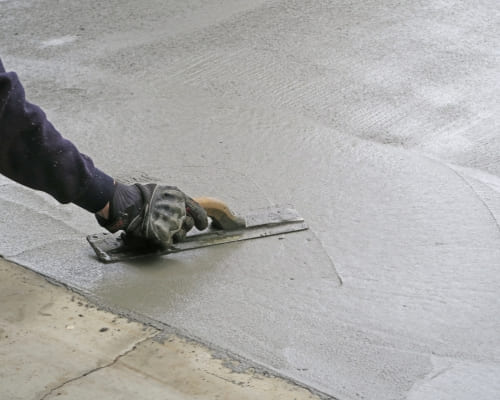
Concrete Driveways
Durable concrete driveways built for Werribee's reactive basalt clay - compacted base, correct thickness, steel mesh and control joints, in plain, coloured or exposed aggregate. New crossovers and replacements across the Wyndham corridor.
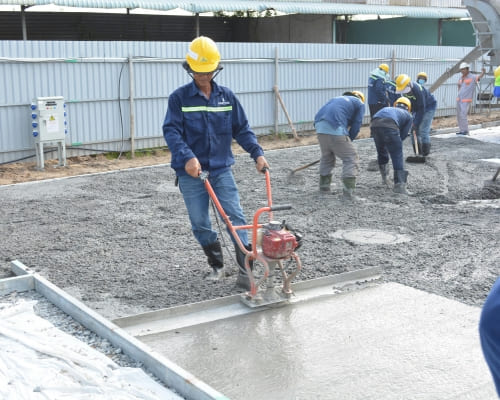
Concrete Slabs & Footings
House slabs, shed floors and strip and pad footings poured to AS 2870 for Werribee's reactive basalt clay. Site classification first, engineered design to follow, fixed on-site quotes across the Wyndham corridor.

Exposed Aggregate Concrete
Exposed aggregate concrete for Werribee driveways, paths, alfresco and pool surrounds - washed to reveal the stone for grip and low upkeep. Compacted base, reinforced, sealed, fixed on-site quotes.
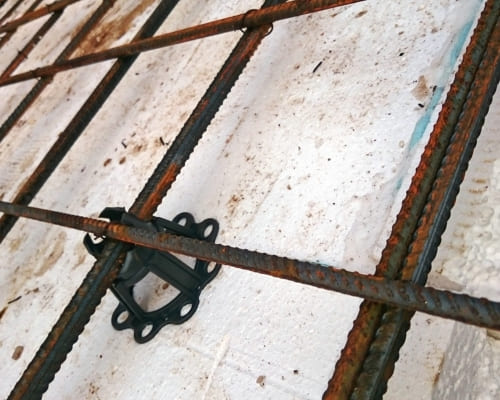
Concrete Paths & Footpaths
Side paths, garden paths and footpaths built for Werribee's reactive clay. Compacted base, steel mesh, correct falls and joints so a path stays level and drains. Broom, exposed aggregate or coloured finishes. Call 0468 042 026.
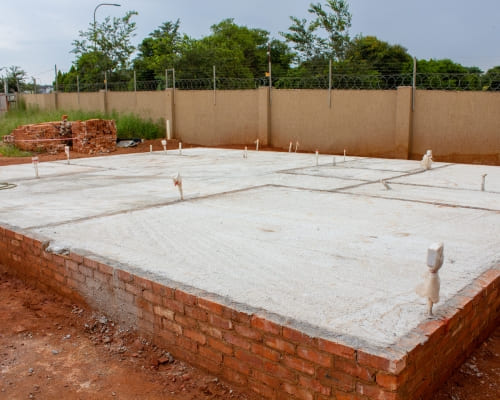
Concrete Kerbs & Edging
Garden edging, mowing strips, driveway kerbs and commercial profiles across Werribee and Wyndham. Machine-laid for long runs, hand-formed around curves, haunched and jointed for reactive clay. Call 0468 042 026.
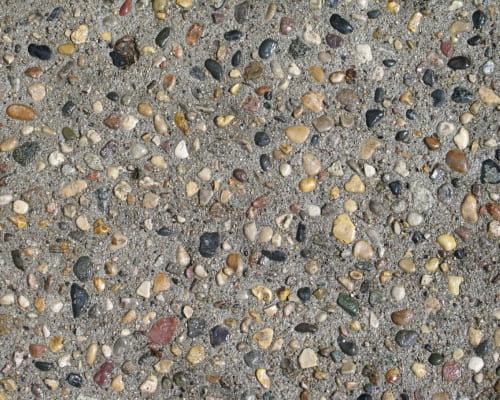
Concrete Repairs
Crack repair, trip-hazard grinding, spalling floors and sunken slabs across Werribee and Wyndham. Every repair starts with diagnosing the cause, and a straight answer where replacement is the cheaper option. Call 0468 042 026.
Concrete Retaining Walls
Sleeper, core-filled block and poured reinforced retaining walls across Werribee and Wyndham. Built to AS 4678 with the drainage this clay demands. Engineering and permits handled for walls over a metre. Call 0468 042 026.
Polished Concrete
Polished concrete floors across Werribee and Wyndham, from salt and pepper to full stone exposure. Mechanically polished with no coating to peel, or grind and seal where the budget suits. Call 0468 042 026.
Concrete Sealing
Sealing and resealing driveways, exposed aggregate and decorative concrete across Werribee and Wyndham. Preparation quoted as its own line item, because that is what decides whether a seal lasts. Call 0468 042 026.
Concrete Resurfacing
Spray-on, stencil and bonded overlays across Werribee and Wyndham, with no demolition and no new base. Assessed first, because an overlay on a moving slab is money spent twice. Call 0468 042 026.
Coloured Concrete
Coloured concrete driveways, paths and alfresco areas across Werribee and Wyndham, with oxide run through the mix rather than painted on. Test panel poured before the shade is committed. Call 0468 042 026.
Honed Concrete
Honed concrete driveways, alfresco areas and pool surrounds across Werribee and Wyndham. Ground to a specified grit and sealed at low sheen, so it stays smooth underfoot and grippy wet. Call 0468 042 026.
Stamped Concrete
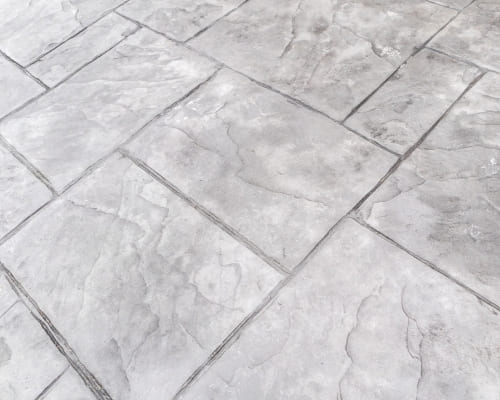
Stamped concrete driveways, paths, alfresco areas and pool surrounds across Werribee and Wyndham, in slate, flagstone, timber-look and cobble patterns. One continuous slab, no joints to weed. Call 0468 042 026.
concreting In Williams Landing
FREQUENTLY ASKED QUESTIONS
Everything you need to know about our concreting In Williams Landing
Is the ground in Williams Landing reactive clay?
Yes. Williams Landing sits on Melbourne's western volcanic plains, where the natural soil is reactive basalt clay that swells and shrinks with moisture. Many estate lots also sit on engineered fill from the development, which can keep settling under a new slab. Peak Concreting Werribee works from the block's soil report and prepares the base and reinforcement so the concrete copes with that movement rather than cracking over it.
Can you pour a driveway on a brand-new Williams Landing block?
New estate blocks are a large part of the work in Williams Landing, so the crew is used to pouring driveways, crossovers and paths on recent builds. The main check is that any fill has settled and the base is compacted properly before the pour, guided by the soil report. On a fresh block the concreters assess the ground first, then prepare it so the finished driveway drains correctly and holds up under daily traffic.
Is exposed aggregate a good choice for a new home here?
Exposed aggregate is one of the most popular finishes on Williams Landing's newer homes because it looks premium, hides marks and gives a slip-resistant surface. It suits driveways, paths and alfresco areas and pairs well with modern estate facades. The crew lays it over the same prepared base as a plain driveway, then washes back the surface to reveal the stone and seals it on request.
Do you pour shed slabs and alfresco pads in Williams Landing?
Yes. Shed slabs, garage slabs, studio bases and alfresco pads are common jobs on Williams Landing's compact lots where owners are adding to a new home. Each slab is poured to the right thickness with reinforcement suited to the load, whether it carries a garden shed or a vehicle, and to AS 2870 where it is structural. Call 0468 042 026 to describe the job and get a written quote.
How much does concreting cost in Williams Landing?
Concreting in Williams Landing is priced by the square metre and by the finish, so a plain driveway, an exposed-aggregate one and a decorative slab all sit at different rates. Fill depth, access on a compact block, and how much old concrete needs removing also affect the figure. Peak Concreting Werribee gives a fixed, itemised written quote after seeing the block rather than a guess over the phone, with figures ex GST and confirmed on site.
Do you also cover Point Cook, Laverton and Truganina?
Yes. Williams Landing borders Point Cook to the south, Laverton to the east and Truganina to the north, and the same crew pours across all of them along with Werribee, Hoppers Crossing and Tarneit. Jobs on the estates either side of Palmers Road and Point Cook Road are part of the regular run. If a street sits on the edge of the area, a quick call confirms coverage. Call 0468 042 026.
TESTIMONIALS
What Williams Landing Homeowners Say About Us
Request A Free Quote
GET A FREE QUOTE
BUSINESS
SERVICES
OPERATING HOURS
Sun: 6am - 10pm
Mon: 6am - 10pm
Tue: 6am - 10pm
Wed: 6am - 10pm
Thu: 6am - 10pm
Fri: 6am - 10pm
Sat: 6am - 10pm