Concreting Wyndham Vale, Driveways and Shed Slabs
Wyndham Vale is an established and still-growing suburb in the City of Wyndham, sitting on some of the most reactive volcanic clay in Melbourne's west. Peak Concreting Werribee works across the suburb, where basalt floaters are common, parent rock often runs within a metre of the surface, and the highly reactive ground means slabs frequently need engineered pier-and-beam or stiffened footings to stay sound.
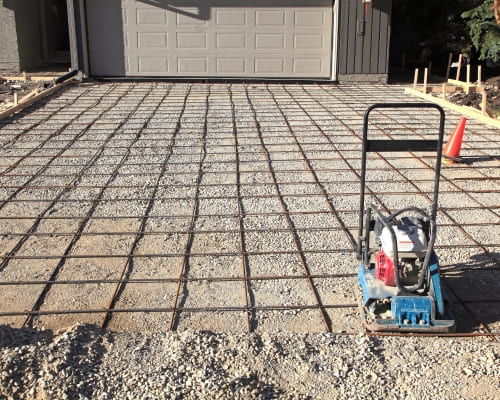
That ground shapes every job. Older Wyndham Vale homes bring repair and replacement of slabs and driveways that have moved on the clay, while the newer estates need house slabs, driveways and alfresco built to cope with it from the start. The owner reads the block, recommends the soil test this reactive ground warrants, and builds to the engineered footing design where it is called for. Every Wyndham Vale pour is engineered for highly reactive clay and the rock beneath it.
GET A FREE QUOTE
GET A FREE QUOTE
OUR STORY
Concreting Wyndham Vale: Your Local Concreters
Concreting Wyndham Vale needs spans a wider range than the pure estate suburbs, because the area is two things at once. Newer estate releases generate first driveways, shed and alfresco slabs and the pads builders leave off. Older established streets and larger green wedge allotments on the western edge generate replacement work, bigger machinery slabs and restumping. Across nearly 13,700 properties the ground shifts from engineered estate fill to open paddock.
Resurfacing a tired slab instead of replacing it
Not every ageing driveway on the established streets needs replacing. A slab that is faded, stained and dusty but still flat, draining correctly and not moving is an ideal resurfacing candidate, and an overlay avoids the demolition, the cartage and the new base entirely. What rules a slab out is movement: cracks still opening, panels lipped against one another, or a surface already debonding will take any coating down with them.
Access and scheduling across estate and rural streets
Access changes completely between the two halves. On an estate street it is construction traffic, unmade verges and other trades on neighbouring blocks, or on an established one, mature landscaping and kerbside parking. On a green wedge allotment it is an unsealed approach, a gateway built for farm vehicles and a long run to the pour. A truck standing position and a pump position are confirmed in advance either way.
SERVICES WE OFFER IN Wyndham Vale
Concrete Poured for Estate Fill and Open Green Wedge Ground
Wyndham Vale has two ground conditions rather than one, which is unusual and is why a site test decides the slab instead of a suburb-wide assumption. Across the estates, engineered fill placed to level blocks sits over reactive basalt clay. On the green wedge allotments to the west there is no fill, just open paddock on that same clay, exposed with nothing to shade or stabilise the moisture around a slab.
Why estate fill keeps settling under a slab
Engineered fill is placed and compacted to a specification, which makes it buildable rather than inert. It continues to consolidate under its own weight and under whatever is built on it for years, and it consolidates more where it is deeper. Where a lot was cut on one side and filled on the other there are two settlement rates across a single block, and the straight crack along that boundary is the commonest early failure on estate concrete here.
Reactive basalt clay across Melbourne's west
The clay beneath both halves is basalt-derived with high reactivity, which under AS 2870 classifies most of this ground as reactive. That classification sets slab thickness, beam depth and the reinforcement schedule, and it is why a slab here is engineered rather than poured as a flat pad. Loose basalt boulders known as floaters run through the clay and turn up in footing excavation, more often on the western allotments than in the estates.
Drainage on flat blocks and larger open allotments
Both halves are flat, so falls are built rather than found, but the problem differs. On an estate block it is water held against a slab edge keeping the clay beneath swollen while ground a metre away dries. On an open allotment it is run-off arriving across the paddock and collecting against whatever is built in its path, which needs a cut-off drain uphill and a discharge point genuinely lower than the slab.
Why choose us in Wyndham Vale
Why Wyndham Vale Households Choose Peak Concreting
A suburb with two ground conditions punishes a crew that pours the same slab everywhere. An estate block needs the fill and the settlement question answered; an open allotment needs the exposure and the run-off answered. Every job starts from the block's own soil report and, on replacement work, from establishing why the first slab failed. Quotes are fixed and itemised before any concrete is ordered, with demolition and cartage shown separately where they apply.
Fully insured, Werribee based, fixed written quotes
Peak Concreting Werribee works next door in Werribee rather than driving in from across the city, carries twenty million dollars in public liability cover, and quotes every job fixed and itemised on site, with the excavation, base, steel, finish and joint cutting listed separately. Anything the ground forces to change, and footing excavation on these plains can meet floaters or shallow rock, is agreed in writing before it is built.
Sealing and resealing a Wyndham Vale driveway
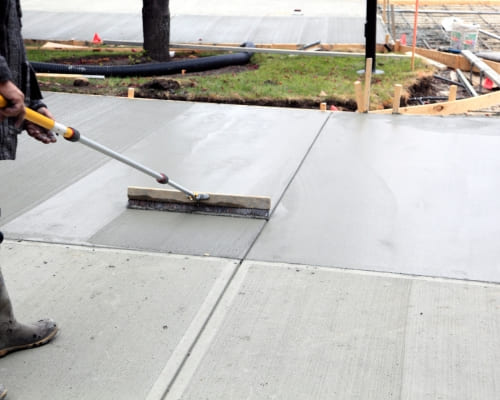
Most estate driveways here are decorative rather than plain, and a decorative surface depends on its sealer for appearance as much as protection, which is why an unsealed exposed aggregate driveway reads flat and grey within a few summers. The newer estates have no mature trees and almost no shade, so the summer sun is harder on a topical film here than on an established street. The water test says when a reseal is due.
SERVICES WE OFFER IN Wyndham Vale
Wyndham Vale Covered, Wollahara Rise to Honour Avenue
The whole of Wyndham Vale is covered, and it divides into the newer estate releases, the older established streets, and the larger green wedge allotments on the western edge. Ground, access and the age of the existing concrete all change between the three, which is why each job starts with the block rather than the postcode. Parks and reserves through the suburb also mean a number of blocks back onto a reserve rather than a street.
Honour Avenue, Matheson Avenue and Yucca Street pockets
The Honour Avenue, Matheson Avenue and Yucca Street pockets are among the established parts of the suburb, so this is where replacement work and restumping concentrate, with mature landscaping and fencing to work around and a position needed for broken concrete to leave. Original driveways here were often poured before reactive-soil detailing was routine, which is why so many are cracking in random patterns rather than on joint lines.
Newer estate releases and the Wollahara Rise end
Toward the Wollahara Rise end and the newer releases this is first-pour country: driveways on handed-over blocks, shed slabs, alfresco pads and side paths. Where a street is still building out, construction traffic and unmade verges affect where a truck can stand. These are also the blocks where fill is most recent and settlement most active, so the season of settling before a driveway goes on matters most here.
Blocks backing onto parks and reserves
A good number of blocks here back onto one of the suburb's parks or drainage reserves rather than another street, and that changes two things. Rear access is restricted or absent, so anything poured out the back is pumped or barrowed through the property. And the levels at the rear boundary are set by the reserve and its drainage, so falls on an alfresco or shed slab are worked to that rather than chosen freely.
Why choose us in Wyndham Vale
Concrete Driveways Wyndham Vale: New Pours and Replacement
Both driveway jobs run here in volume. First pours continue across the newer releases, while the older established streets have reached the age where original driveways are cracking, stepping and sinking. The two are priced and built differently, and on a replacement the first question is why the original failed, because a new slab laid on the same soft ground with the same drainage fault will go the same way.
New driveways and second-vehicle widening
A first driveway goes in once the builder is off site and the fill has had a season to settle, set out to the approved crossover with levels taken off the garage threshold so water runs away from the house. Widening is fussier: the new section ties into the existing slab at matched level with a joint where they meet so each can move independently, and the crossover usually has to be widened with council approval as well.
Crossovers and the City of Wyndham permit step
The crossover is the section between the kerb and the property boundary and it is Wyndham City Council infrastructure, so a new one or a widening needs council consent, built to the standard profile and levels and inspected. That step is flagged at quoting stage rather than discovered mid-job, because approval takes time, cannot be obtained retrospectively, and a driveway poured up to an unapproved crossover leaves the owner holding the problem.
How concreting in Wyndham Vale is quoted per square metre
Concreting is rated per square metre of finished surface, built from the excavation and cartage, the compacted crushed rock, the steel, the concrete volume at the designed thickness, the labour and the joint cutting. On a replacement two further items dominate and both concern the old slab: breaking it out and carting it away. The larger green wedge jobs work the other way, spreading fixed costs across more square metres.
Exposed aggregate and coloured driveway finishes
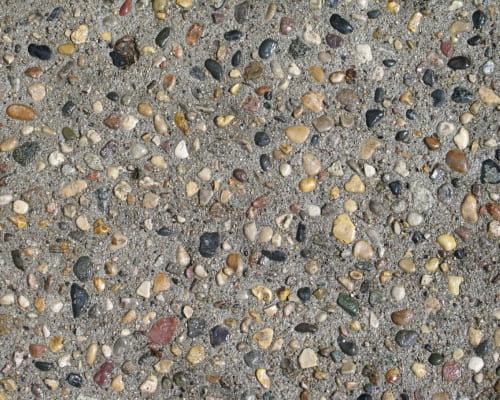
The rendered and brick facades across the estates suit a finish other than plain grey. Exposed aggregate washes the paste back to leave stone standing proud, giving grip and hiding marks. Coloured concrete runs oxide through the mix, with charcoals and mid greys reading well against dark roofs, while warmer tones suit the older brick on established streets. Both depend on sealing to hold their depth.
SERVICES WE OFFER IN Wyndham Vale
Small Concreting Jobs and Repairs Around Wyndham Vale
Three streams of small work run here. New blocks need the pads and paths the builder left off. Estate concrete produces early-life cracking as fill finishes consolidating. And the older streets have genuinely aged concrete with age-related failures, including houses on stumps that have moved. Small jobs carry a minimum charge rather than a per-metre rate, so grouping everything on a property into one visit is the sensible approach, and it lets one assessment cover the whole property rather than a single item.
Crack repair and trip-hazard grinding
A lipped edge over about five millimetres is a genuine trip hazard and grinds back to a feathered taper the same day with no concrete needed, up to roughly twenty millimetres before reinforcement cover becomes a concern. What a crack pattern means differs by street age here: on an estate block a straight crack usually marks the cut-to-fill line, while on an older street it is more often seasonal clay movement on a slab with no joints.
Concrete stumps and restumping work
Older houses on the established streets sit on stumps rather than a slab, and on reactive clay those stumps move with the seasons until floors slope and doors stop closing. Replacing timber stumps with concrete stumps removes the rot and the insect damage that shortens a timber stump's life, though the ground keeps moving regardless, so the footing beneath each stump is sized for this clay rather than copied from what came out.
Path, step and clothesline pads
The recurring small pours are a side path down the boundary or replaced where the original has failed, a pad under the clothesline, a step or two at a back door where levels have moved, and a slab for a bin store. Each needs the same base preparation and falls as anything larger, and on compact lots each usually has to be hand-barrowed.
Why choose us in Wyndham Vale
Concrete Slabs Wyndham Vale: Sheds, Garages and Alfresco
Slab work divides along the same line as everything else here. On an estate lot it is a shed, a garage or an alfresco squeezed in behind a finished house with a metre of side access. On a green wedge allotment it is a machinery shed sized for a tractor or a trailer with room for a truck to reach it. The three sections below cover both scales and the alfresco work common to each.
Shed and garage slabs on standard estate lots
A shed slab is set out from the shed's own hold-down points, so dimensions come off the shed drawings rather than a rounded figure, with the edge thickened where the frame bolts down. Thickness follows the use. Access governs the method on these lots, so concrete is commonly pumped or barrowed to the rear, and that is priced before the job rather than discovered on the day. Setbacks and easements are checked before set-out.
Larger shed and machinery slabs on green wedge blocks
On the western allotments the sheds are sized for machinery, a trailer or a workshop rather than a mower, so the slab is thicker, more heavily reinforced and set out to portal frame hold-downs rather than a light shed kit. The advantage is access, since a truck can usually reach the pour instead of everything being barrowed. Falls are set so wash-down and rain leave the building rather than pooling inside it.
Alfresco and pergola slabs for growing families
An alfresco slab added after the build meets the existing house slab at a level flush enough that there is no trip at the door, while falling away so water never runs back towards the wall. The two are separated by a joint so each can move independently, because tying a new slab rigidly to a house pad on reactive clay drags one or the other apart. Finishes here are usually honed or coloured to suit the room it opens off.
concreting Services we offer In Wyndham Vale
Concrete Driveways
Durable concrete driveways built for Werribee's reactive basalt clay - compacted base, correct thickness, steel mesh and control joints, in plain, coloured or exposed aggregate. New crossovers and replacements across the Wyndham corridor.
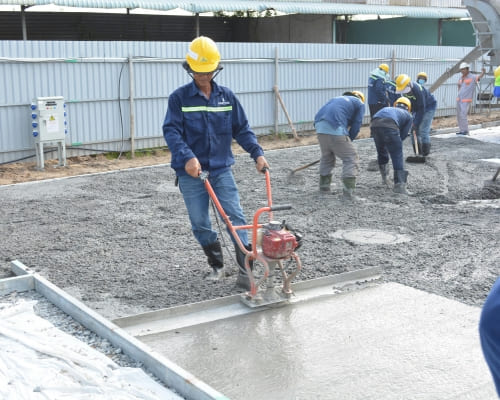
Concrete Slabs & Footings
House slabs, shed floors and strip and pad footings poured to AS 2870 for Werribee's reactive basalt clay. Site classification first, engineered design to follow, fixed on-site quotes across the Wyndham corridor.
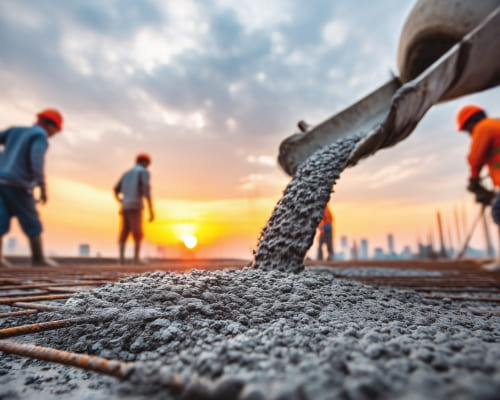
Exposed Aggregate Concrete
Exposed aggregate concrete for Werribee driveways, paths, alfresco and pool surrounds - washed to reveal the stone for grip and low upkeep. Compacted base, reinforced, sealed, fixed on-site quotes.
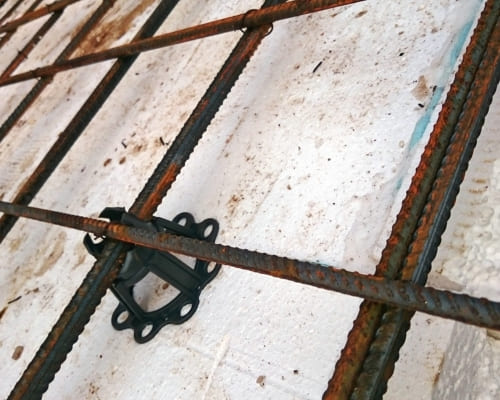
Concrete Paths & Footpaths
Side paths, garden paths and footpaths built for Werribee's reactive clay. Compacted base, steel mesh, correct falls and joints so a path stays level and drains. Broom, exposed aggregate or coloured finishes. Call 0468 042 026.
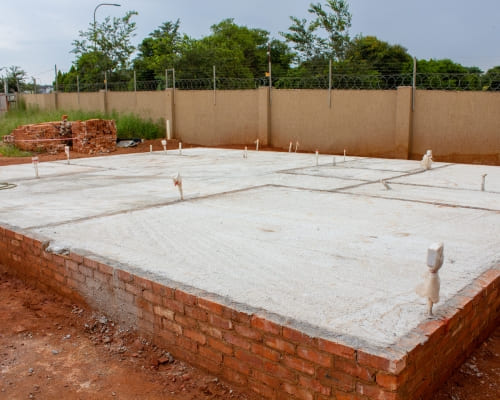
Concrete Kerbs & Edging
Garden edging, mowing strips, driveway kerbs and commercial profiles across Werribee and Wyndham. Machine-laid for long runs, hand-formed around curves, haunched and jointed for reactive clay. Call 0468 042 026.
Concrete Repairs
Crack repair, trip-hazard grinding, spalling floors and sunken slabs across Werribee and Wyndham. Every repair starts with diagnosing the cause, and a straight answer where replacement is the cheaper option. Call 0468 042 026.
Concrete Retaining Walls
Sleeper, core-filled block and poured reinforced retaining walls across Werribee and Wyndham. Built to AS 4678 with the drainage this clay demands. Engineering and permits handled for walls over a metre. Call 0468 042 026.
Polished Concrete
Polished concrete floors across Werribee and Wyndham, from salt and pepper to full stone exposure. Mechanically polished with no coating to peel, or grind and seal where the budget suits. Call 0468 042 026.
Concrete Sealing
Sealing and resealing driveways, exposed aggregate and decorative concrete across Werribee and Wyndham. Preparation quoted as its own line item, because that is what decides whether a seal lasts. Call 0468 042 026.
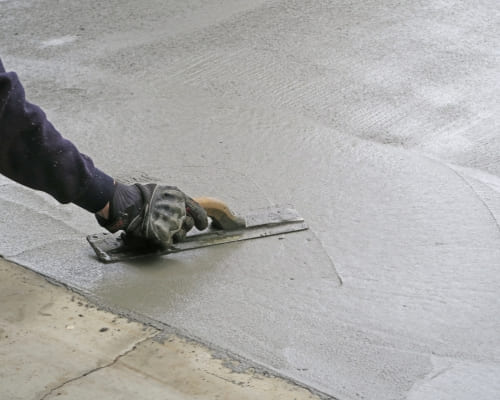
Concrete Resurfacing
Spray-on, stencil and bonded overlays across Werribee and Wyndham, with no demolition and no new base. Assessed first, because an overlay on a moving slab is money spent twice. Call 0468 042 026.
Coloured Concrete
Coloured concrete driveways, paths and alfresco areas across Werribee and Wyndham, with oxide run through the mix rather than painted on. Test panel poured before the shade is committed. Call 0468 042 026.
Honed Concrete
Honed concrete driveways, alfresco areas and pool surrounds across Werribee and Wyndham. Ground to a specified grit and sealed at low sheen, so it stays smooth underfoot and grippy wet. Call 0468 042 026.
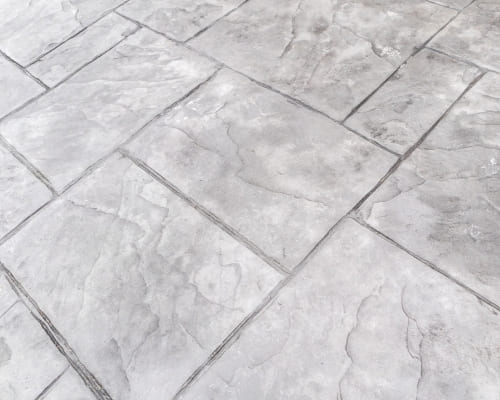
Stamped Concrete
Stamped concrete driveways, paths, alfresco areas and pool surrounds across Werribee and Wyndham, in slate, flagstone, timber-look and cobble patterns. One continuous slab, no joints to weed. Call 0468 042 026.
concreting In Wyndham Vale
FREQUENTLY ASKED QUESTIONS
Everything you need to know about our concreting In Wyndham Vale
Why is the ground in Wyndham Vale so hard on concrete?
Because Wyndham Vale sits on some of the most reactive volcanic clay in Melbourne's west, which swells hard when wet and shrinks hard when dry, and that strong movement cracks, lifts and slopes concrete not built for it. Basalt floaters and shallow rock add to the challenge. Peak Concreting Werribee deals with it by recommending a soil test and building to an engineered footing design, so the slab copes with the movement rather than failing over it.
Do slabs here need piers or special footings?
Often, yes. On Wyndham Vale's most reactive blocks a plain slab-on-ground is not enough, and the engineer may call for a stiffened raft or waffle-pod slab with deeper edge beams, or bored piers that found the slab below the active clay. The crew builds to that engineered design and sets the piering out around any shallow rock. A soil test and site classification confirm what a particular block needs. Call 0468 042 026.
Can you replace a driveway that has cracked and lifted?
Yes, that is a common job on Wyndham Vale's established blocks, where earlier concrete has moved on the reactive clay. The crew removes the old concrete, works out why it failed, prepares and reinforces a base built for the movement, and cuts control joints so the new slab handles the ground it sits on. The owner gives an honest view on repair versus replacement and a fixed written quote either way. Call 0468 042 026.
Will basalt rock affect excavation on my block?
It can. Wyndham Vale commonly has basalt floaters and parent rock within about a metre of the surface, which can be met when excavating for footings, piers or a slab edge. The crew plans for it, breaking out rock where a footing has to go deeper and setting the piering out around it. The owner allows for the likely rock when pricing the job, so it is handled without a surprise mid-dig.
How much does concreting cost in Wyndham Vale?
Concreting here is priced by the area and the finish, and the engineered footings this reactive ground can need are a real factor, so a plain driveway, a decorative one and an engineered slab all sit at different rates. Site classification, footing depth, reinforcement, access and removing old concrete all shift the figure. Peak Concreting Werribee gives a fixed, itemised written quote after seeing the block, with figures ex GST and confirmed on site.
Is exposed aggregate a good choice in Wyndham Vale?
Yes. Exposed aggregate is popular across Wyndham Vale's older and newer homes because it looks premium, hides marks and gives a slip-resistant surface, and it suits driveways, paths and alfresco areas. The crew lays it over the same properly engineered base a plain driveway needs on this reactive ground, then washes back the surface to reveal the stone and seals it on request. The finish is only as good as the base beneath it. Call 0468 042 026.
TESTIMONIALS
What Wyndham Vale Homeowners Say About Us
Request A Free Quote
GET A FREE QUOTE
BUSINESS
SERVICES
OPERATING HOURS
Sun: 6am - 10pm
Mon: 6am - 10pm
Tue: 6am - 10pm
Wed: 6am - 10pm
Thu: 6am - 10pm
Fri: 6am - 10pm
Sat: 6am - 10pm